Architecture in Bali is no longer an aesthetic question, it is an investor skill. With 7 million foreign tourists expected in 2025 and a rental market that harshly punishes poorly designed villas, understanding Balinese codes becomes strategic before it is cultural. Between Tri Hita Karana, the PBG permit and Airbnb requirements, putting a project together demands a precise reading of the local framework. In this guide, I walk you through the traditional codes, the styles that perform as rentals, the 2026 rules (PBG, height, moratorium), the design process and the recurring mistakes made by foreign investors.
À retenir
- Traditional Balinese architecture rests on three structuring principles (Tri Hita Karana, Asta Kosala Kosali, kaja-kelod orientation) that still guide high-performing contemporary villas.
- The maximum height is capped at 15 m and the PBG permit (formerly IMB) is a prerequisite for any new build, with a 2025 moratorium on agricultural land.
- A turnkey villa project takes 14 to 18 months to build at 400 € to 700 €/m² of construction, with an entry ticket from 25.000 € through shared investment.
Contents (6 chapters)
- 01What are the codes of traditional Balinese architecture?
- 02Traditional or contemporary tropical architecture: which to choose?
- 03What rules govern building a villa in Bali in 2026?
- 04Which architectural style maximises rental profitability?
- 05How does the architectural design process unfold, from sketch to permit?
- 06Which architectural mistakes should you avoid as a foreigner?
What are the codes of traditional Balinese architecture?
Traditional Balinese architecture rests on three documented cosmological principles: Tri Hita Karana (harmony between people, the divine and nature), Asta Kosala Kosali (rules of proportion and placement) and the kaja-kelod orientation, which aligns every building on the Mount Agung-to-sea axis. These rules still structure today's premium contemporary villas.
The iconic elements appear in almost every serious project: the candi bentar (split entrance gate), the bale (pavilion open to nature), alang-alang roofs (traditional thatch), and a compound organised around a central courtyard with dedicated pavilions (kitchen, family temple, bedrooms).
Balinese spatial organisation follows Asta Kosala Kosali: each pavilion is oriented along the kaja-kelod axis, from Mount Agung towards the sea, with a family temple systematically placed in the north-east of the compound. To integrate these codes into a contemporary project, see our approach to architectural design.
Traditional or contemporary tropical architecture: which to choose?
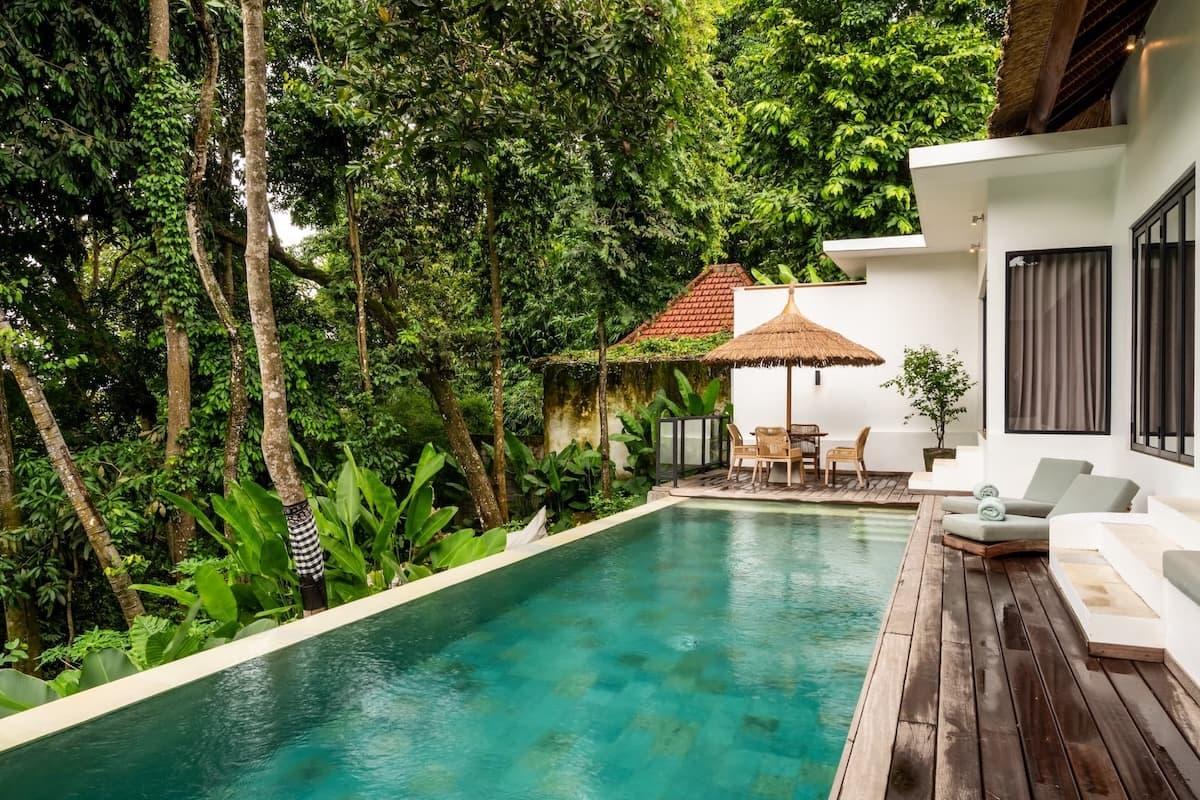
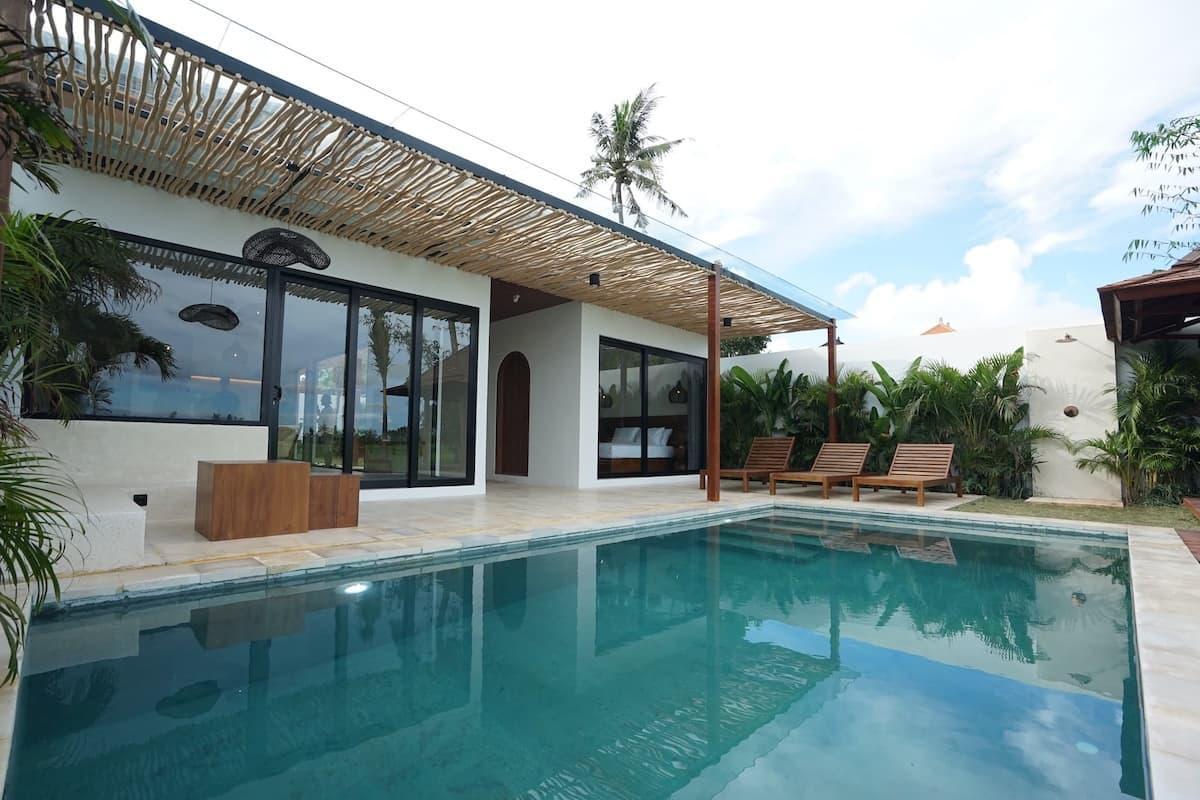
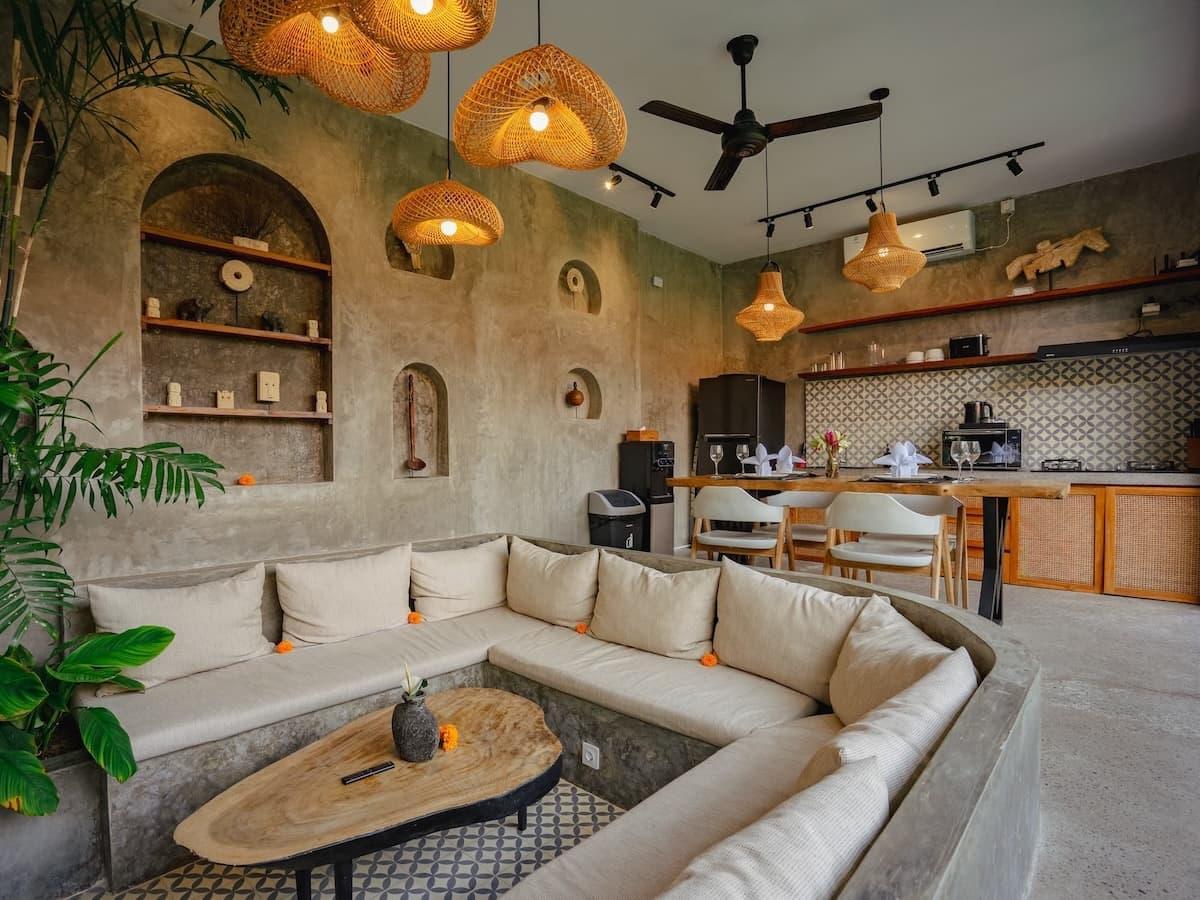
The majority of rental villas that perform in Bali adopt a Tropical Modern style: a hybrid of Balinese codes (pitched roofs, local materials, indoor-outdoor living) and contemporary standards (open living, infinity pool, floor-to-ceiling glazing). Prices in the premium areas of Canggu and Berawa have risen by 7 to 15% per year (Bali Home Immo, 2025), driven largely by this format.
Pure traditional remains relevant in one precise segment: Ubud, eco-luxury wellness, a high ADR but a narrower and more seasonal market. Tropical Modern dominates Canggu, Berawa and Uluwatu, with massive rental demand and superior Airbnb photogenics.
In practice, the choice depends on the programme: Tropical Modern to target maximum occupancy and resale liquidity, traditional bamboo and timber for a differentiating wellness positioning in Ubud.
What rules govern building a villa in Bali in 2026?
Three constraints structure every project in 2026: maximum height 15 m (to preserve the ridge lines of the temples), the PBG permit (Persetujuan Bangunan Gedung) which replaced the IMB in 2021, and RTRW zoning which prohibits any construction on green agricultural land. On top of this comes a moratorium announced in 2025 by Governor Wayan Koster, freezing new villas and hotels on productive agricultural land for two years.
The PBG requires prior technical validation (structural, environmental and hydraulic compliance), coupled with the KKPR (land-use authorisation). Standard timeline: 1 to 2 months for a clean file, up to 4 months in a sensitive zone.
In practice, the choice of plot determines 80% of the administrative difficulty: orange/red zone (tourism) for short-term rental, yellow zone (residential) for long-term rental, green zone off-limits.
Which architectural style maximises rental profitability?
Rental profitability depends on the style × area × programme triptych. A Tropical Modern in Canggu or Uluwatu targets an ADR of 200 € to 400 € per night; an eco-bamboo villa in Ubud targets a premium wellness segment with a higher ADR but more seasonal occupancy. Well-located villas went from a median price of 272.000 € in early 2024 to 410.000 € in early 2025 in prime areas (RUMAVI, 2025).
In most Western capital cities, a rented apartment yields low single digits net at best. In Canggu or Berawa, a well-designed Tropical Modern villa targets an occupancy rate of around 75% and a net yield of 10 to 13% per year.
Four architectural criteria drive performance:
- Photogenics of the pool (infinity or wet-edge, unobstructed view): the number one factor in Airbnb ranking
- Bedroom to en-suite bathroom ratio: 1 to 1 minimum
- Semi-open spaces suited to the tropical climate (natural ventilation)
- Unobstructed views and tropical greenery integrated from the design stage
Thinking about a project in Bali?
Our experts review your situation for free, with no commitment.
How does the architectural design process unfold, from sketch to permit?
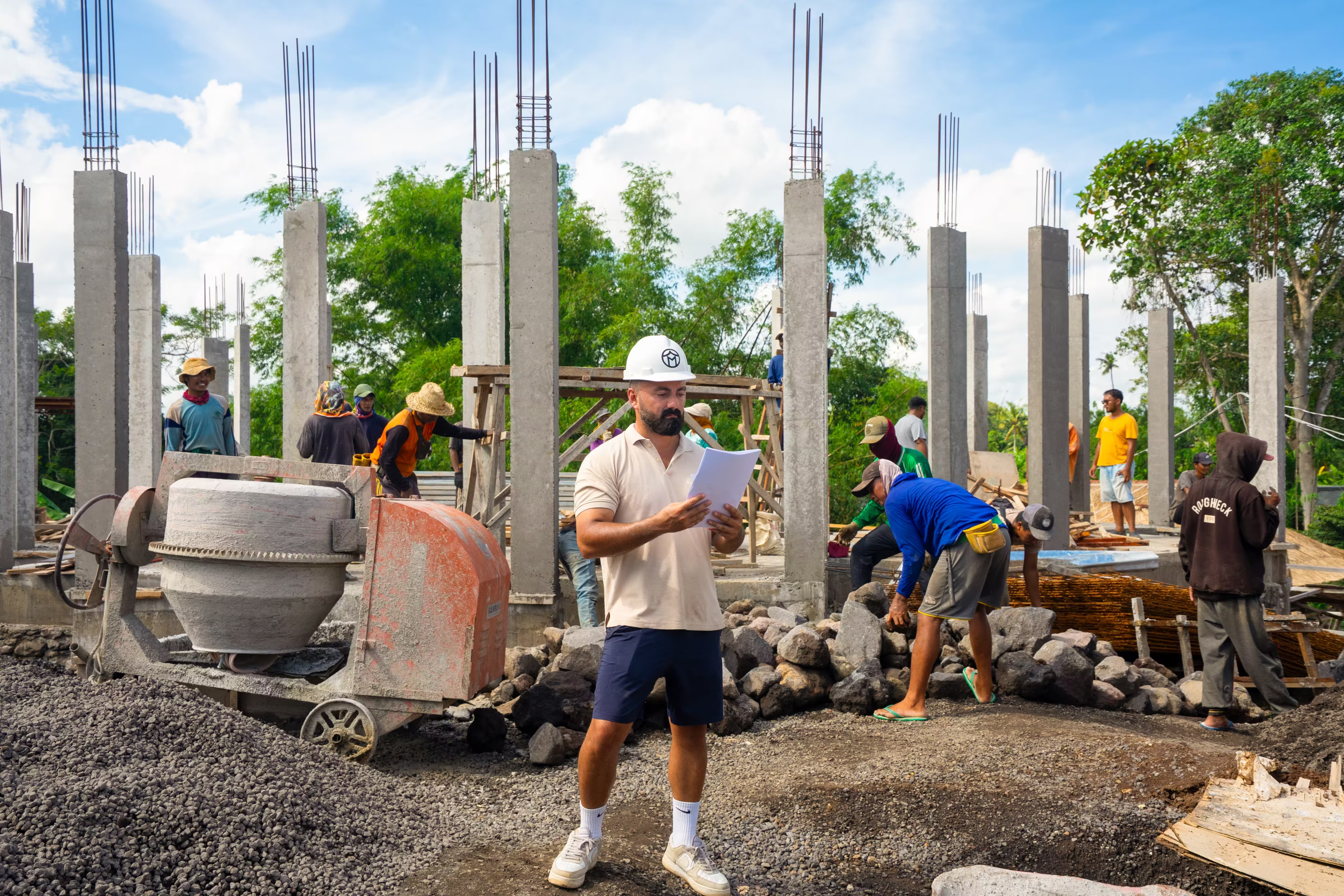
A complete villa project in Bali involves four phases before handover, for a total of 14 to 18 months between signature and delivery. The design itself takes 3 to 4 months, the PBG adds 2 to 4 months, and construction takes 8 to 14 months depending on the surface area.
Here are the detailed phases of a turnkey project:
- Site survey, due diligence and feasibility: 1 month
- Preliminary design, plans and material choices: 2 to 3 months
- PBG filing and administrative validation: 2 to 4 months
- Construction (3-bedroom villa): 13 months
- Furnishing and handover to management: 1 month
On the budget side, the breakdown is stable from one project to the next: land 30 to 45% of the total, construction at 400 € to 700 €/m², architect fees 5 to 8%, legal and permit costs, furnishing and decoration 8 to 12%.
Which architectural mistakes should you avoid as a foreigner?
Five mistakes recur across the vast majority of projects managed remotely by foreign investors. All of them cost points of net yield, and sometimes months of delay on the PBG. As a reminder, 37% of real estate projects in Bali in 2025 are sold off-plan (Smart Advisory Solutions / REID, 2025), which amplifies the need for architectural discipline upfront.
The recurring mistakes:
- Copying a European floor plan without tropical adaptation (closed volumes, little ventilation)
- Ignoring cross natural ventilation (air conditioning running 24/7, electricity bill doubled)
- Neglecting solar orientation (a west-facing facade without overhang means overheating)
- Underestimating drainage and water evacuation in the rainy season (flooding)
- Choosing a firm with no concrete experience of the Balinese PBG
In practice, all of these mistakes can be neutralised at the preliminary design stage, never afterwards. Hence the importance of a firm that thinks about design AND rental operation from the very first sketch.
Frequently asked questions
Height is capped at 15 m across the whole island under provincial regulations, to preserve the ridge lines of the temples. In practice, almost all two-storey villas remain well under this ceiling (6 to 8 m), so this rule is never an obstacle for a standard residential project. See our approach to architectural design.
Yes, the PBG (Persetujuan Bangunan Gedung) is mandatory for any new build or significant extension since the 2021 decree that replaced the IMB. It validates technical compliance and adherence to RTRW zoning before construction begins. Building without a PBG exposes you to administrative demolition. See our legal management in Bali page.
Architect fees represent 5 to 8% of the construction cost, and construction itself sits between 400 € and 700 €/m² depending on the level of finish. For a 3-bedroom villa of 250 m², that means 12.000 € to 25.000 € in design fees and 100.000 € to 175.000 € in pure construction. See the details of turnkey construction.
Yes, it is entirely possible and even valued in the wellness market in Ubud, where traditional bamboo and timber compounds perform in a premium segment. The programme does, however, target a narrower market than a Tropical Modern villa in Canggu. The choice depends on your yield strategy and the guest profile you are targeting. See our approach to villa furnishing.
The photogenics of the pool, the indoor-outdoor flow and the orientation directly determine Airbnb ranking. Two neighbouring villas can show a 30% gap in RevPAR purely because of design. A well-designed villa targets a net yield of 10 to 13% and around 75% occupancy. Entry possible from 25.000 € through shared investment.
Conclusion
Architecture in Bali in 2026 plays out at the intersection of three forces: structuring traditional codes (Tri Hita Karana, kaja-kelod, Asta Kosala Kosali), a recent regulatory framework (PBG, 15 m height limit, agricultural land moratorium) and the demands of a premium rental market that harshly punishes generic villas.
A well-designed project builds in 14 to 18 months at 400 € to 700 €/m² of construction, with a target net profitability of 10 to 13% per year in premium areas. The Tropical Modern style remains the format that maximises occupancy in Canggu and Uluwatu, while traditional bamboo and timber performs in the Ubud wellness segment.
The real question before signing is not the style itself, but the alignment between architectural programme, chosen area and yield strategy.