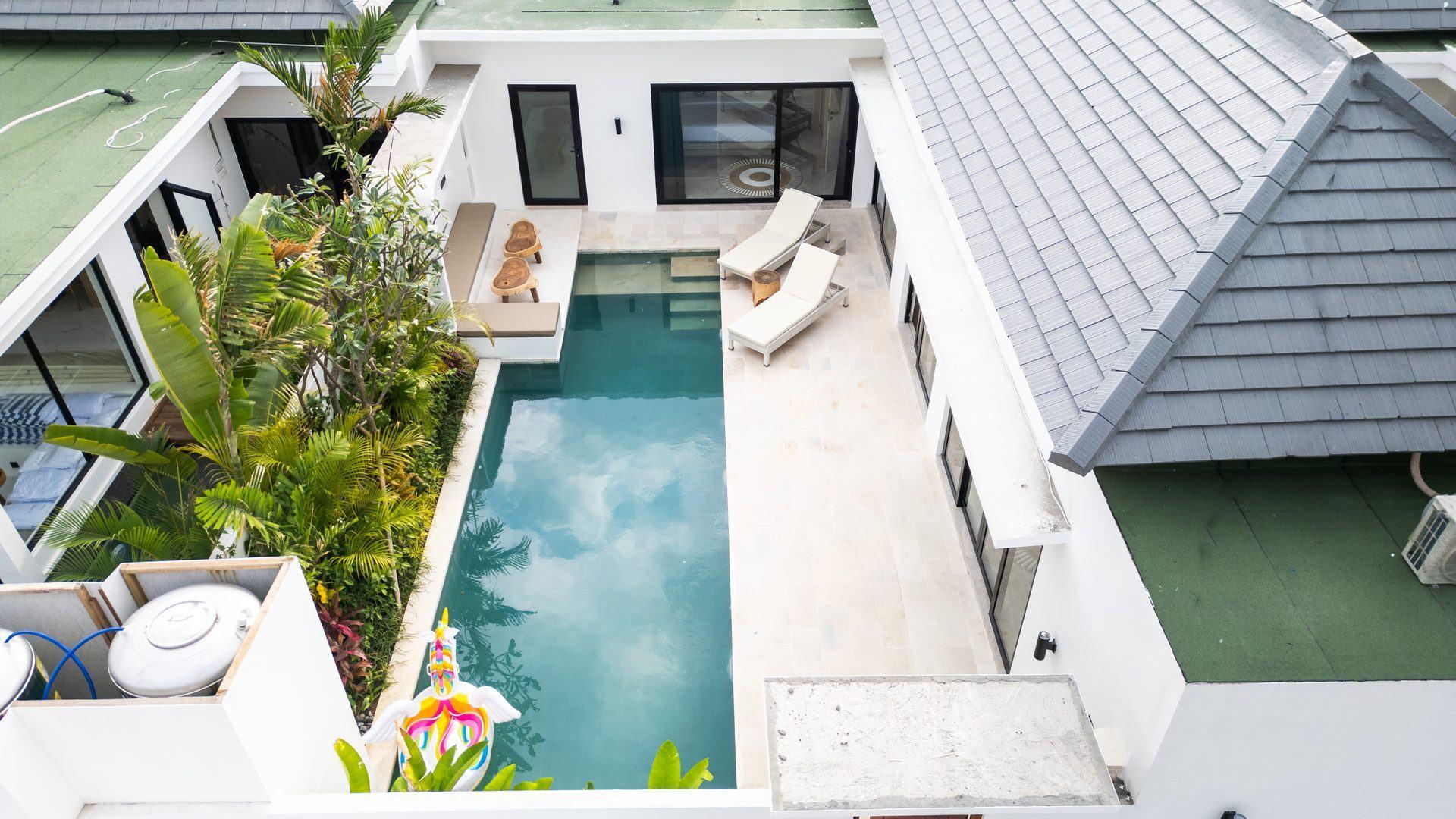
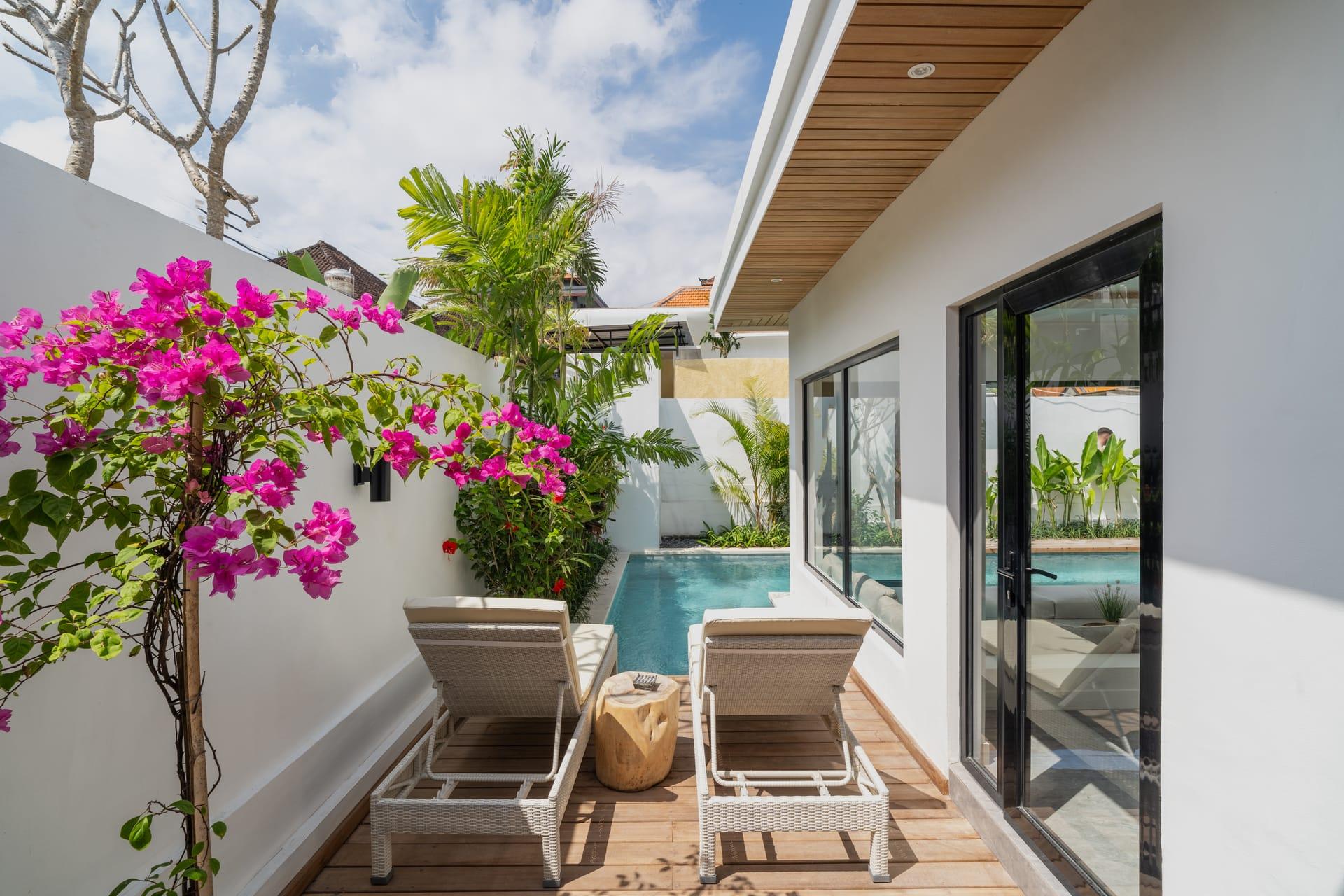
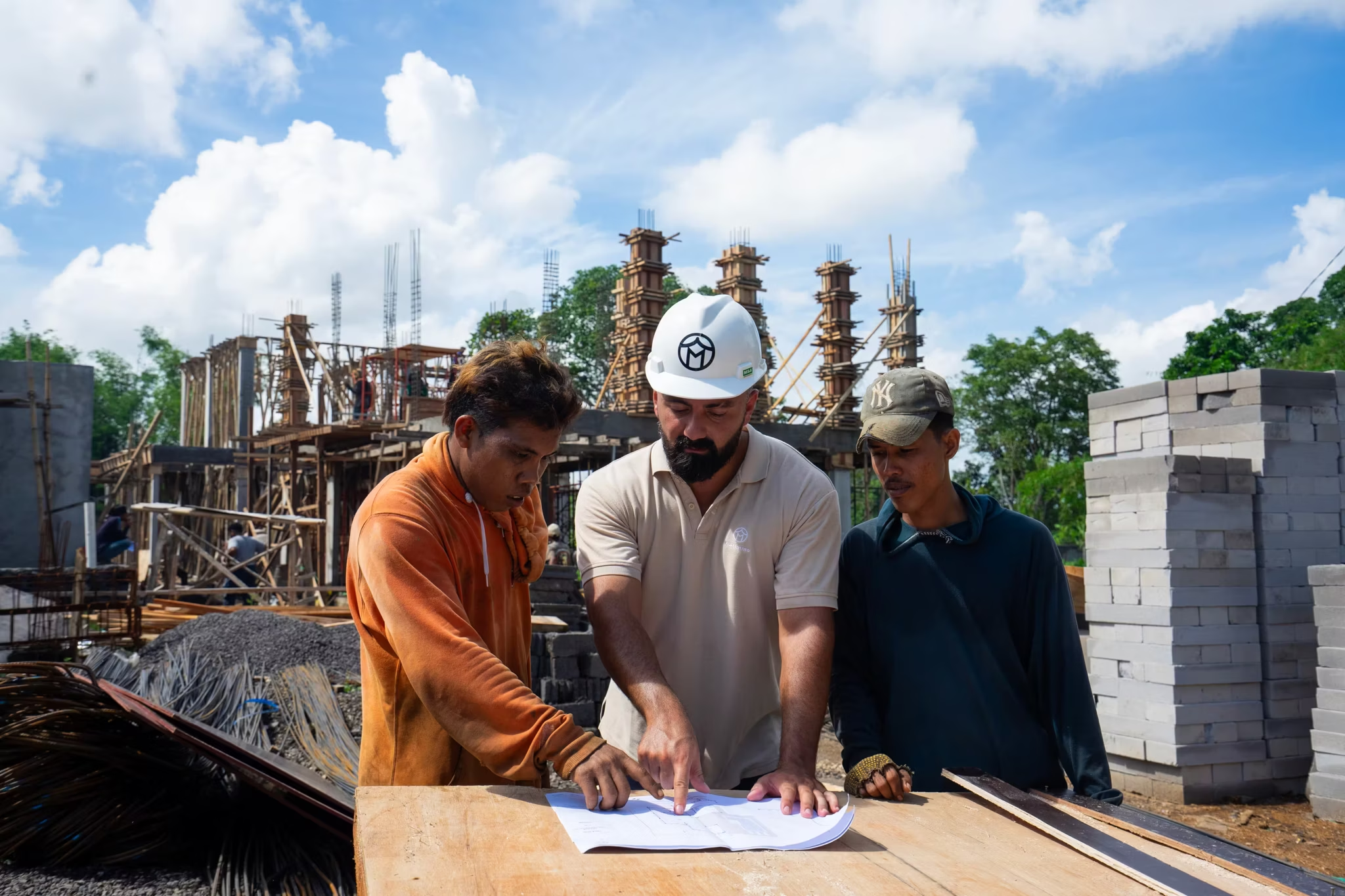
Building in Bali attracts a growing number of international investors, with a construction cost between 1.400 € and 2.000 €/m² depending on the level of finish. The project involves a precise legal framework, a recent moratorium on agricultural land and structuring technical choices. Poorly anticipated, these points quickly turn the opportunity into a trap. In this guide, I explain the legal framework applicable to foreigners, the real budget in 2026, the construction timeline, the frequent traps and the expected net yield. On the ground, what we have observed since 2021 confirms that well-structured projects keep their promises.
Key takeaways
- A foreigner can build in Bali legally through a PT PMA (foreign-owned company, HGB title) or through a leasehold: these two structures cover almost all investor projects.
- Construction cost between 1.400 € and 2.000 €/m², and a turnkey villa from 169.000 € (1 bedroom), around 240.000 € for a 2-bedroom.
- Expect 14 to 18 months between the first call and the handover of the keys, for a net yield of 10 to 13% per year on well-positioned villas.
Contents (6 chapters)
- 01Can a foreigner legally build in Bali in 2026?
- 02What are the steps to build a villa in Bali?
- 03What budget should you plan to build in Bali in 2026?
- 04How do you choose the right plot in Bali after the 2025 moratorium?
- 05Which traps should you avoid when building in Bali remotely?
- 06What net profitability can you expect from a villa built in Bali?
Can a foreigner legally build in Bali in 2026?
Yes, provided you use a compliant structure. Two arrangements cover almost all projects: the PT PMA (foreign-owned company) which holds a Hak Guna Bangunan (HGB, a renewable right to build), or the leasehold (Hak Sewa) taken directly, generally between 25 and 30 years on the Balinese market with renewal options.
On our developments, the leasehold is set at 31 years, extension included.
The Hak Pakai remains reserved for Indonesian tax residents holding a KITAS. The nominee arrangement (an Indonesian frontman), on the other hand, exposes you to confiscation of the property: to be avoided absolutely.
What are the steps to build a villa in Bali?
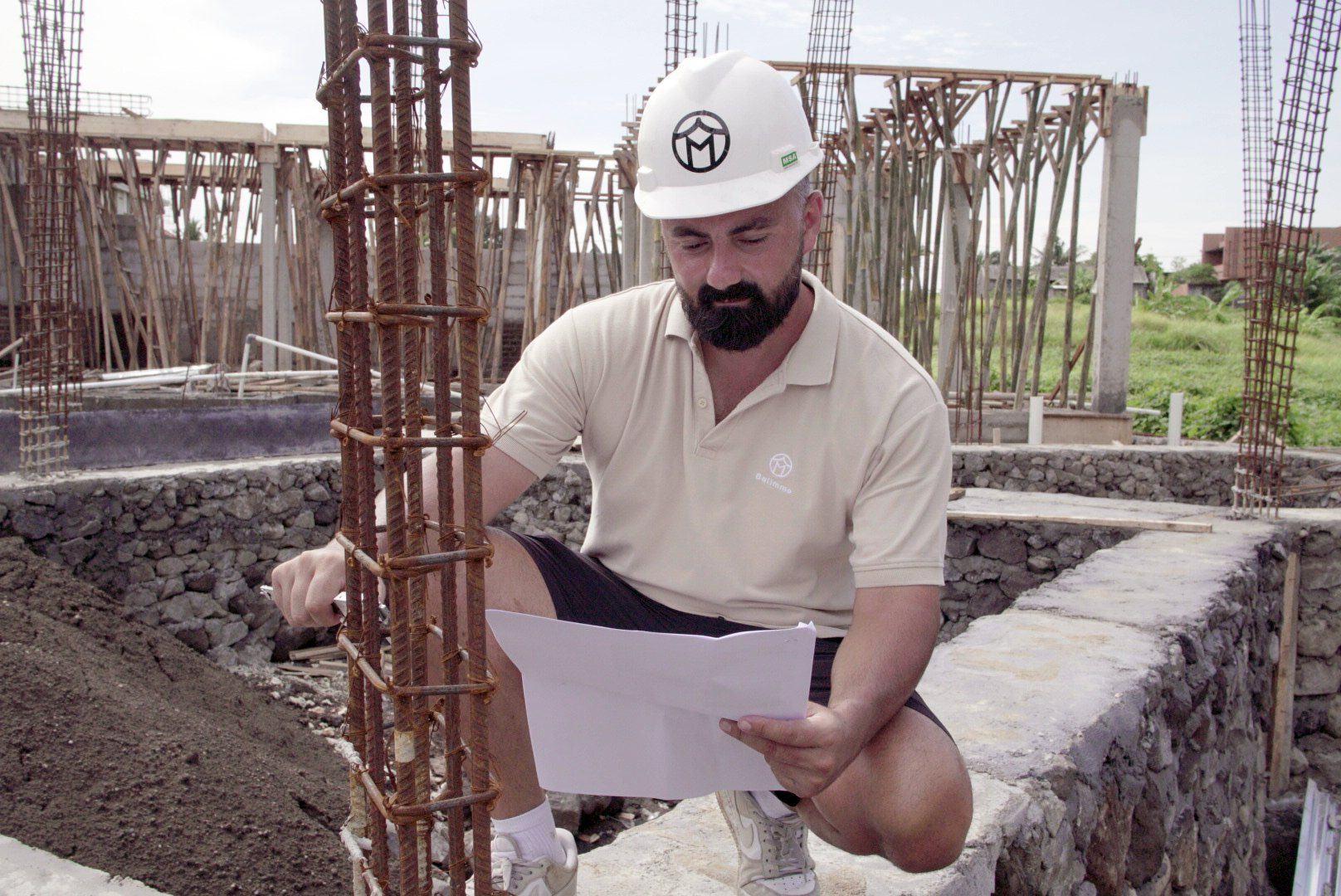
The project unfolds in eight successive milestones: land sourcing, legal and zoning due diligence, notarial deed (PPAT), architectural design, filing of the PBG permit, construction, obtaining the SLF (certificate of conformity), furnishing and rental launch. The PBG, which replaced the IMB in 2021, is the condition for opening the site; the SLF validates conformity at delivery.
The calendar of a turnkey villa project involves five blocks:
- Land sourcing and due diligence: 1 to 2 months
- Legal structuring and notarial process: 1 month in parallel
- Architectural design and obtaining the PBG permit: 2 to 4 months
- Construction: 12 months for a 2-bedroom, 13 months for a 3-bedroom, 14 months for a 4-bedroom
- Furnishing and handover to rental management: 1 month
In total, expect 14 to 18 months between the first call and the handover of the furnished keys.
What budget should you plan to build in Bali in 2026?
Three items structure the envelope: land, construction, ancillary costs. On our sites, the construction cost sits between 1.400 € and 2.000 €/m² depending on the level of finish, from standard to premium. That is the range to remember for 2026: the lower figures still circulating date from before the rise in materials and skilled labour costs.
On the land side, prices vary strongly by area:
- Berawa: 1.000 € to 1.500 €/m²
- Canggu: 600 € to 830 €/m²
- Seminyak: 520 € to 730 €/m²
- High-potential areas (Seseh, Cemagi, Nyanyi): markedly lower, with significant appreciation between purchase and delivery
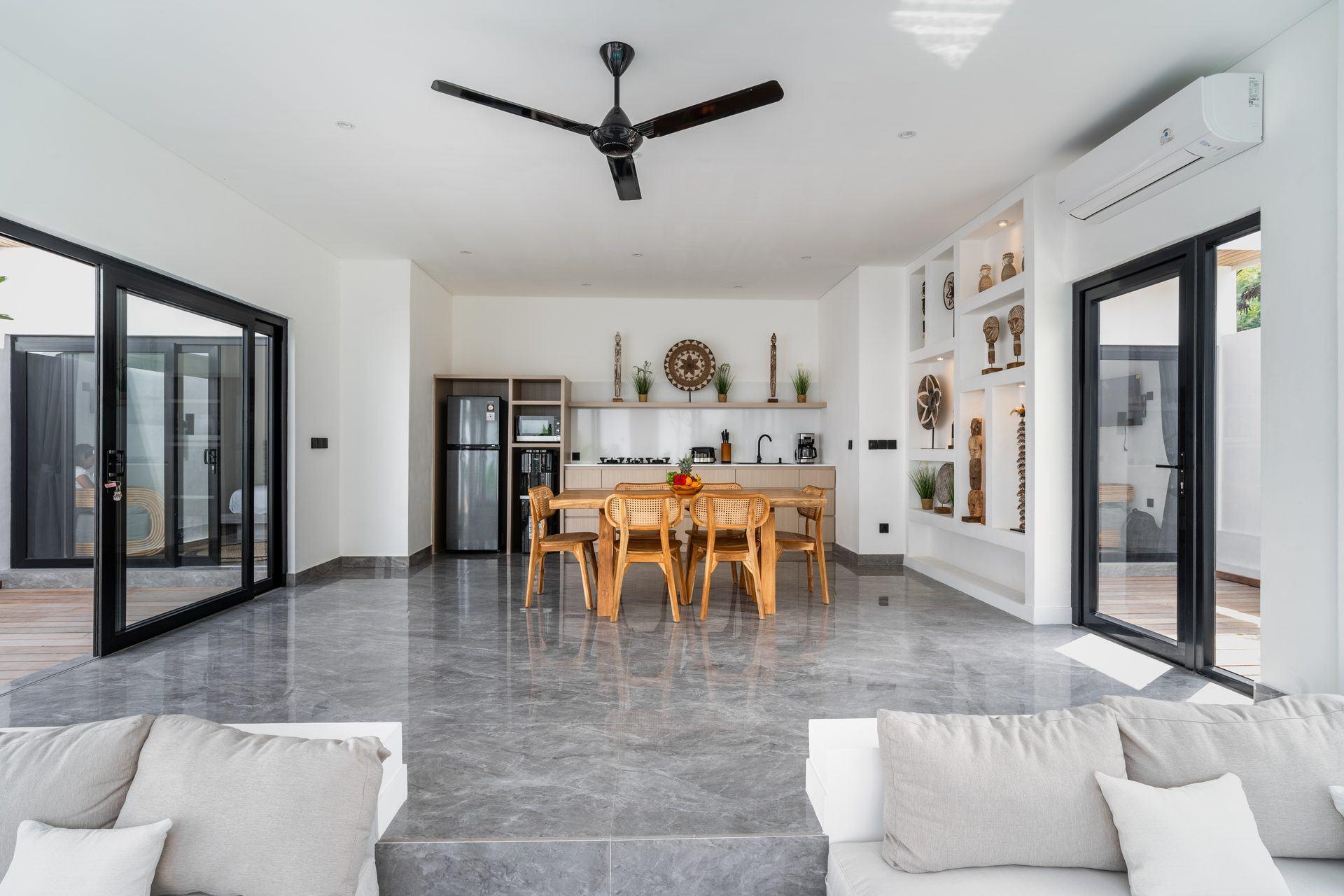
Add architect fees, the PBG permit, the notary and furnishing. Turnkey (leasehold land, construction, taxes, PT PMA and furnishing), budgets stand as follows: from 169.000 € for a 1-bedroom, around 240.000 € for a 2-bedroom of 90 m², 290.000 € to 380.000 € for a 3-bedroom of 109 to 128 m², and around 435.000 € for a 4-bedroom of 145 m².
Thinking about a project in Bali?
Our experts review your situation for free, with no commitment.
How do you choose the right plot in Bali after the 2025 moratorium?
In September 2025, after the island's deadly floods, Governor Wayan Koster established a formal moratorium on the construction of villas, hotels and restaurants on productive agricultural land (The Jakarta Post, 2025). This measure makes the legal supply scarcer and mechanically increases the value of existing compliant projects.
Indonesian zoning distinguishes three broad categories:
- Green zone (agricultural / pertanian): construction now frozen
- Yellow zone (residential): long-term rental possible, poorly suited to tourism
- Orange/red zone (tourism/commercial): the only one that permits a legal rental villa with a PBG and a Pondok Wisata licence
In practice, the safe, already touristic areas are Canggu, Ubud and Uluwatu. The high-potential areas for 2026 are Seseh, Cemagi and Nyanyi: accessible land, compatible zoning and a strong appreciation trajectory. The north of the island, on the other hand, remains inadvisable. Concretely, the decisive criterion is not the price per m² but zoning compliance: a cheap plot in a green zone has no legal rental value.
Which traps should you avoid when building in Bali remotely?
Property prices in Bali rose by around 8% in 2024, with increases of 10 to 15% per year in micro-markets such as Berawa or Seminyak (MyExpat, 2024). This momentum attracts, but managing a construction site from thousands of kilometres away increases exposure to bad practices. Five mistakes recur in the files we take over:
- Buying land in a non-buildable green zone
- An illegal nominee arrangement (Indonesian frontman)
- A construction contract without payment milestones indexed to progress
- Underestimating working capital (10-15% of the budget)
- Choosing a builder without verifiable references or delivered villas that can be visited
Concretely, three reflexes eliminate most disputes: demand a milestone contract with a retention guarantee, commission independent notarial due diligence separate from the seller, and verify the PBG before any major disbursement beyond the initial deposit.
What net profitability can you expect from a villa built in Bali?
Bali welcomed 17 million visitors in 2025, including 7 million foreigners and 10 million Indonesians. This demand supports the short-term rental market, the main operating model for villas built by foreign investors.
The only figure that matters is the net, after delegated rental management, maintenance, vacancy and Indonesian taxation. The useful result for the investor stands between 10 and 13% net per year on well-positioned villas, compared with the low single-digit net yields typical of residential rentals in most Western markets.
On the tax side, the PT PMA pays 0.5% of revenue in the first years, then 11% on net profit. On resale, around 10% of the price applies, versus 20% in personal ownership.
Frequently asked questions
The build alone takes 12 months for a 2-bedroom, 13 months for a 3-bedroom and 14 months for a 4-bedroom. Adding land sourcing, design, the PBG permit and furnishing, the total timeline stands at 14 to 18 months between the first call and the handover of the keys. See the details on our villa construction in Bali page.
Yes, through land pooling. The entry ticket drops to 25.000 € instead of a minimum of 169.000 € for a solo turnkey villa. The co-investor takes part in a pre-selected project (land, construction and management) with proportional sharing of the yield. Mechanics on our shared investment solution page.
Two arrangements cover almost all projects: the PT PMA, a foreign-owned company holding an HGB title, or the leasehold (Hak Sewa), generally 25 to 30 years on the Balinese market and 31 years on our developments. The choice depends on the targeted rental volume, the holding horizon and the applicable taxation. Full framing on our legal support page.
The construction cost sits between 1.400 € and 2.000 €/m² depending on the level of finish. Turnkey, leasehold land and furnishing included, expect from 169.000 € for a 1-bedroom, around 240.000 € for a 2-bedroom of 90 m² and 290.000 € to 380.000 € for a 3-bedroom. Details on our villa construction in Bali page.
Canggu, Ubud and Uluwatu are the safe bets, already touristic and liquid on resale. Seseh, Cemagi and Nyanyi offer a better price-to-yield ratio for those who accept less established land. The north of the island remains inadvisable. The decisive criterion remains tourism-compatible zoning. See our land sourcing in Bali page.
The net yield on well-positioned villas stands between 10 and 13% per year, after delegated rental management, maintenance, vacancy and Indonesian taxation. The target occupancy rate sits around 75%, with costs of 41 to 43% of revenue. Details on our rental management page.
Conclusion
Building in Bali in 2026 remains accessible to foreigners, with a construction cost of 1.400 € to 2.000 €/m² and a turnkey villa from 169.000 € (or 25.000 € through shared investment), for a full cycle of 14 to 18 months.
The September 2025 moratorium makes legal land scarcer and increases the value of compliant projects. Three reflexes eliminate most disputes: zoning verified before signing, independent notarial due diligence and a milestone contract indexed to progress.
With 17 million visitors in 2025 and a land supply now constrained, the practical question for 2026 is no longer whether Bali remains attractive, but where to place your project and with which structure to secure it. All the resources are compiled in our Bali investor guide.