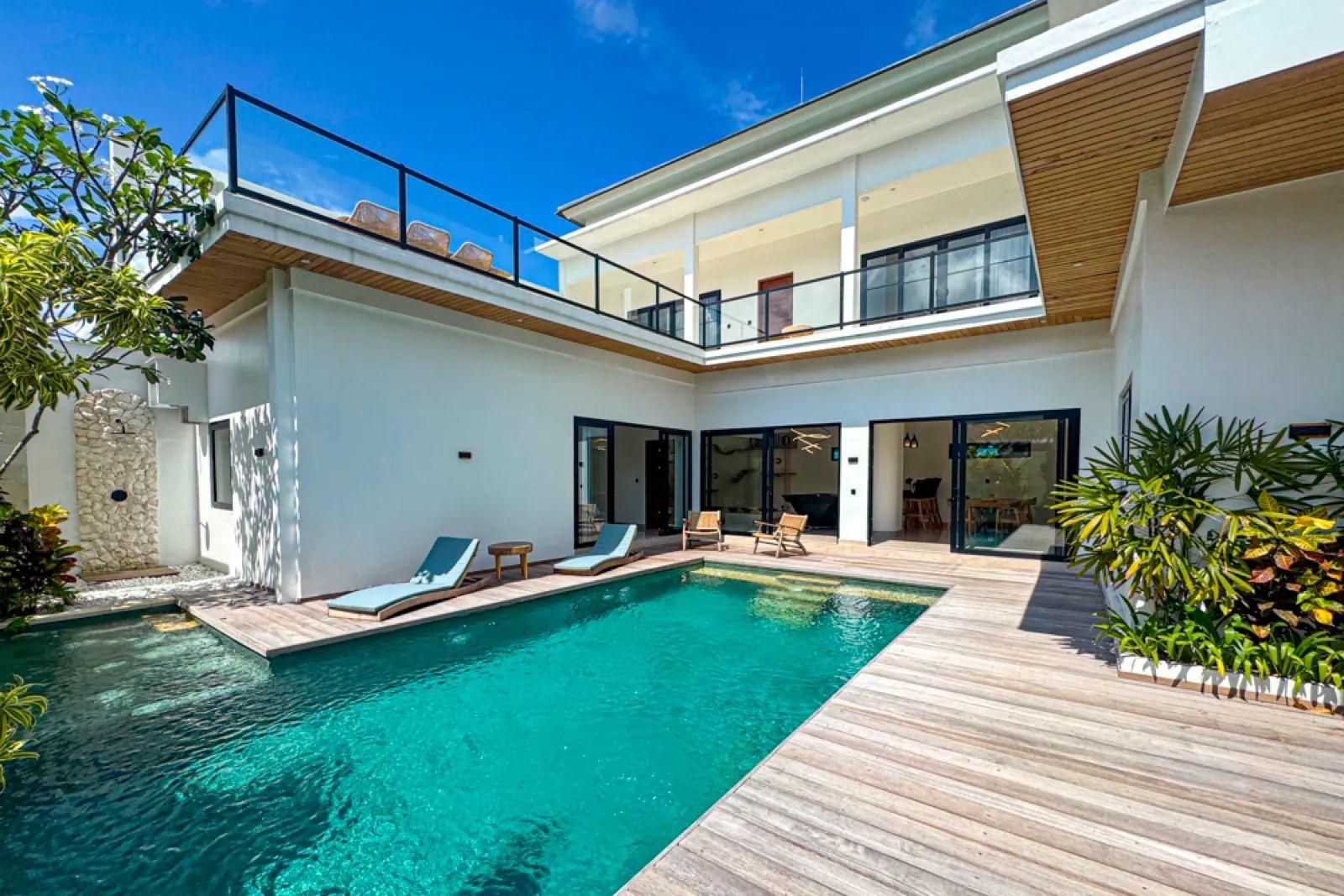
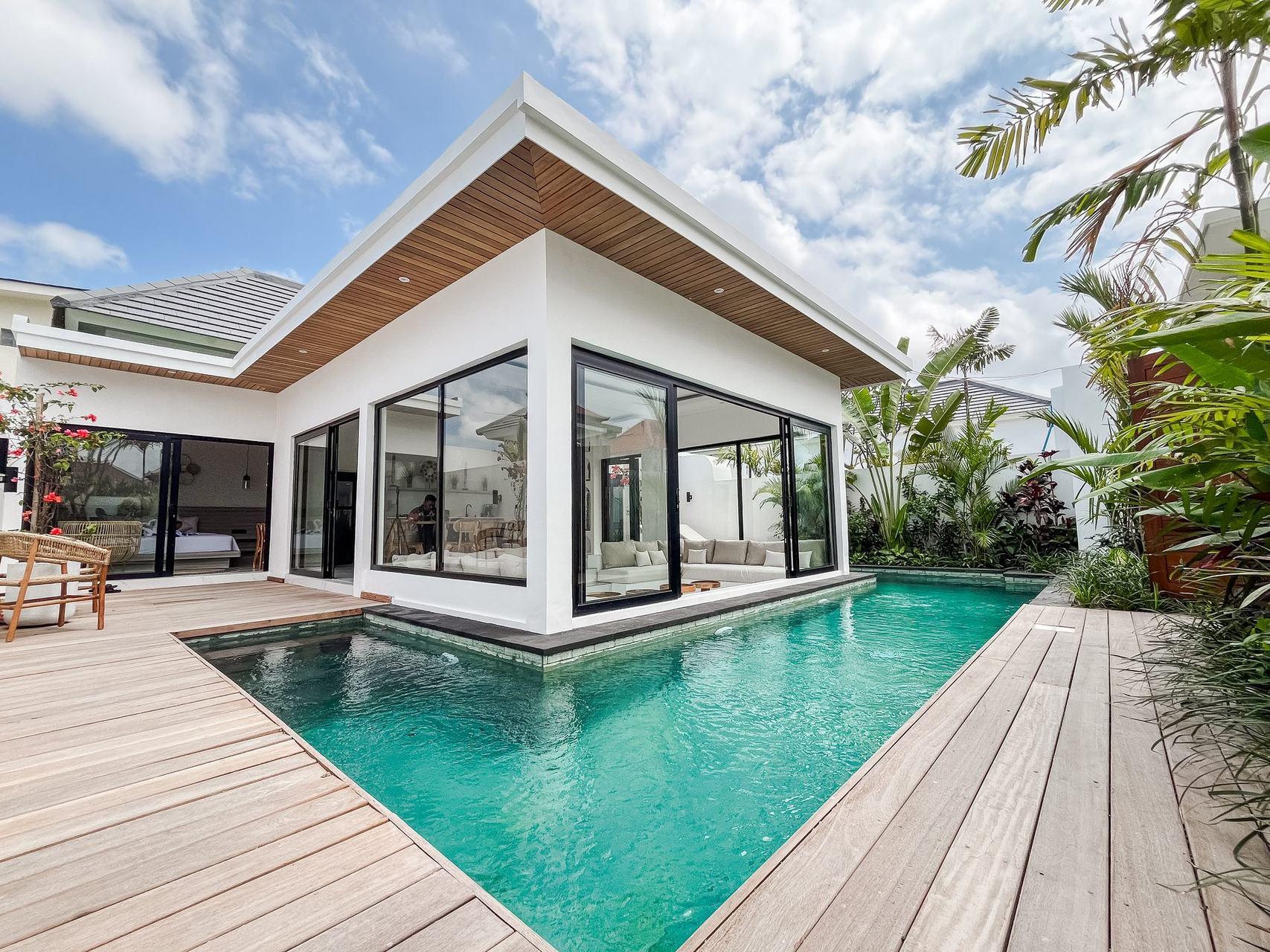
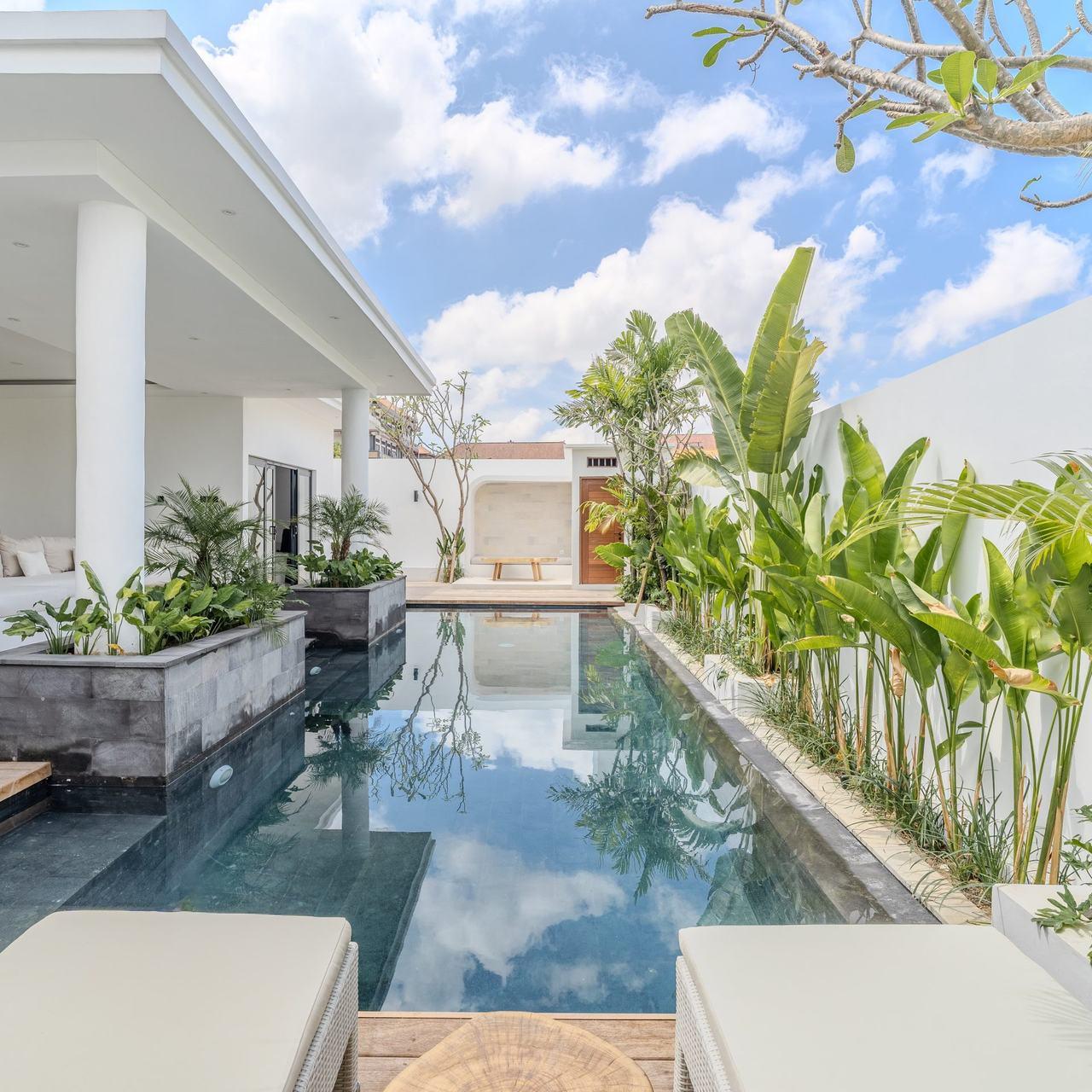
Investing in Pererenan in 2026 means weighing net yields of 10 to 13% against land that is still 30 to 50% cheaper than Canggu, just across the river. The real variable is not the advertised yield, it is the reliability of the legal setup and the quality of the land due diligence. In this guide, I walk you through the legal framework (leasehold or PT PMA), the real budgets for a rental villa, cross-border taxation for foreign investors, the RTRW zoning risks specific to Pererenan, and the concrete steps to launch a project in 2026.
Key takeaways
- Land in Pererenan remains 30 to 50% cheaper than Canggu for comparable rental demand, with value growth of 22% in 2024.
- A well-positioned villa targets 10 to 13% net per year in short-term rental, with an occupancy rate of around 75%.
- Solo villa entry ticket from 169.000 € turnkey, or from 25.000 € through shared investment.
Contents (6 chapters)
- 01Why invest in Pererenan in 2026?
- 02What net rental yield can you expect in Pererenan?
- 03Which legal structures for a foreigner in Pererenan?
- 04Which land risks should you anticipate before buying?
- 05What taxation applies to Pererenan rental income?
- 06How to launch a villa project in Pererenan, step by step?
Why invest in Pererenan in 2026?
Pererenan today captures the overflow from Canggu: same clientele, same rental profile, significantly cheaper land. According to Rumah123, the Badung district (which includes Pererenan) recorded +92.1% growth in foreign property demand between 2022 and 2024, driven by the saturation of Canggu Berawa and the migration of budgets towards the northern coast.
The area sits directly north of Echo Beach, with preserved rice fields, quick access to the Lavash beach club and international schools. The dominant tenant profile is clear: digital nomads on the E33G visa and Australian families on long stays, who accounted for 23.44% of 2025 arrivals according to BPS Bali.
In concrete terms, the 2026 entry window remains favourable as long as the plots on the rice-field side stay zoned residential or tourism.
What net rental yield can you expect in Pererenan?
According to Gravity Bali, villa prices in Canggu rose by +14.5% in 2024, while Pererenan shows value growth of 22%. This differential translates directly into net yield: land acquired 30 to 50% cheaper mechanically improves the return on capital.
In practice, a well-positioned 2-bedroom villa in Pererenan shows an average ADR of 180 € to 280 € in high season, with a target occupancy of around 75% over 12 months. Rental management charges: 18 to 22% of gross revenue. Result: 10 to 13% net per year, versus 11 to 12% in Canggu for a higher entry ticket.
By comparison, rental property in most Western markets rarely exceeds modest single-digit gross yields outside prime cities. The yield gap alone justifies a thorough analysis of the Bali market, provided the project is structured correctly.
Which legal structures for a foreigner in Pererenan?
Three legal routes are open to a foreign investor: notarised leasehold (Hak Sewa), Hak Pakai (right of use), or a PT PMA for declared rental operation. The PT PMA is the standard structure for commercial short-term rental.
The standard leasehold in Pererenan is signed for 25 to 30 years, with renewal options negotiated up to 46 years on some new projects. Through a PT PMA, you access the HGB title: an initial 30 years + 20 + 30 = up to 80 years of secure tenure, the functional equivalent of freehold.
For a declared rental project, the PT PMA has become the undisputed standard. See also our land in Bali guide for the stakes of land acquisition.
Thinking about a project in Bali?
Our experts review your situation for free, with no commitment.
Which land risks should you anticipate before buying?
Three cadastral checks determine the viability of a project in Pererenan: the nature of the title (SHM, HGB, Hak Sewa), RTRW/RDTR zoning, and legal road access. According to MyExpat, property prices in Bali rose by 8% to 15% in 2024 in the premium areas, which fuels speculative pressure and multiplies listings of misclassified plots.
In northern Pererenan, some plots advertised as residential actually fall under agricultural zoning (green zone), where construction is prohibited. Without a cross-check between the BPN (land registry) and the Badung authorities, the PBG permit is refused after acquisition, and the land becomes a frozen asset.
The minimum checks before any payment:
- Original title certificate deposited with the notary (notaris)
- RTRW/RDTR zoning confirmed as orange or yellow zone
- Legal road access (jalan) with a minimum width of 4 metres
- No easements or family disputes on the plot
- PBB (property tax) payment certificate up to date
What taxation applies to Pererenan rental income?
Taxation depends on the chosen structure. Under a PT PMA with the UMKM regime, the final PPh is 0.5% of revenue for 3 years, then 11% on net profit. In a personal name, it is 11% of gross revenue. On resale, a PT PMA pays 10% of the sale price, versus 20% in a personal name.
On the home-country side, Indonesia has double-taxation treaties with most Western countries, which eliminate double taxation, generally through a tax credit. Rental income is taxed in Indonesia through the PT PMA, and dividends repatriated to your country of residence are then taxed under your local rules, net of the treaty relief. Currency conversion is done at the observed average IDR/EUR rate: ~17,000 IDR/€ in 2025.
How to launch a villa project in Pererenan, step by step?
According to Governor Wayan Koster, Bali welcomed 7.05 million foreign visitors in 2025, including 6 million in the Badung district which includes Pererenan. This structural demand validates the rental thesis, but it does not exempt you from rigorous execution.
The timeline of a turnkey villa project in Pererenan involves seven phases:
- Land search and due diligence: 1 to 2 months
- PT PMA structuring and notarial signing: 1 month in parallel
- Leasehold signing or HGB acquisition: 2 to 4 weeks
- Architectural design and PBG permit: 2 to 3 months
- Construction of a 2-bedroom villa: 10 to 12 months
- Furnishing and decoration: 3 to 4 weeks
- Handover to rental management: 2 weeks
Total full cycle: 14 to 18 months between signing and the first commercialised night. Budget for a turnkey solo 2-bedroom villa: from 169.000 €, or from 25.000 € through Balimmo shared investment.
To go further on the Pererenan versus Canggu comparison, also see our guide investing in Canggu.
Frequently asked questions
Solo, a turnkey 2-bedroom villa starts at 169.000 € (leasehold land + construction + PBG permit + furnishing + PT PMA). For a 3-bedroom, budget from 290.000 €. Through pooled investment, the entry ticket drops to 25.000 € via our shared investment solution.
A direct leasehold (Hak Sewa) is signed for a renewable 25 to 30 years, and up to 46 years negotiated on some new projects. Through a PT PMA, the HGB title offers an initial 30 years + 20 + 30 = up to 80 years of secure tenure. Details on our legal management page.
Through the PT PMA's bank account, then a SWIFT transfer to your personal account in your home country. Above 10,000 USD/month, a declaration to Bank Indonesia is mandatory. IDR/EUR conversion at the 2025 average rate of 17,000 IDR/€. The final taxation follows the double-taxation treaty between Indonesia and your country of residence, applied to the net dividends you repatriate.
The secondary market is driven by +92.1% foreign demand in Badung since 2022 (Rumah123). Average observed resale time: 4 to 9 months for a well-managed villa. The remaining leasehold is transferred at market value, with a resale PPh of 10% through a PT PMA versus 20% in a personal name. Our investor ebook details the exit scenarios.
The PT PMA is the structure of choice as soon as you aim for declared commercial rental. The UMKM regime through a PT PMA taxes at 0.5% of revenue for 3 years, versus 11% in a personal name otherwise. Set up in about 1 month, fees ~2.000 €. See our legal structuring.
Conclusion
In 2026 Pererenan combines three verifiable factors: land 30 to 50% cheaper than Canggu, value growth of 22% observed in 2024, and a target net yield between 10 and 13% on well-positioned villas.
Success does not hinge on the market, which remains buoyant with 7 million tourists in 2025. It hinges on three executions: RTRW zoning verified on the plot, a well-drafted leasehold or HGB, and an active PT PMA structure for the UMKM tax regime. Without these three fundamentals, even the best address on the Echo Beach side will not deliver the expected yield.
How many months are left before Pererenan land prices catch up with Canggu Berawa?