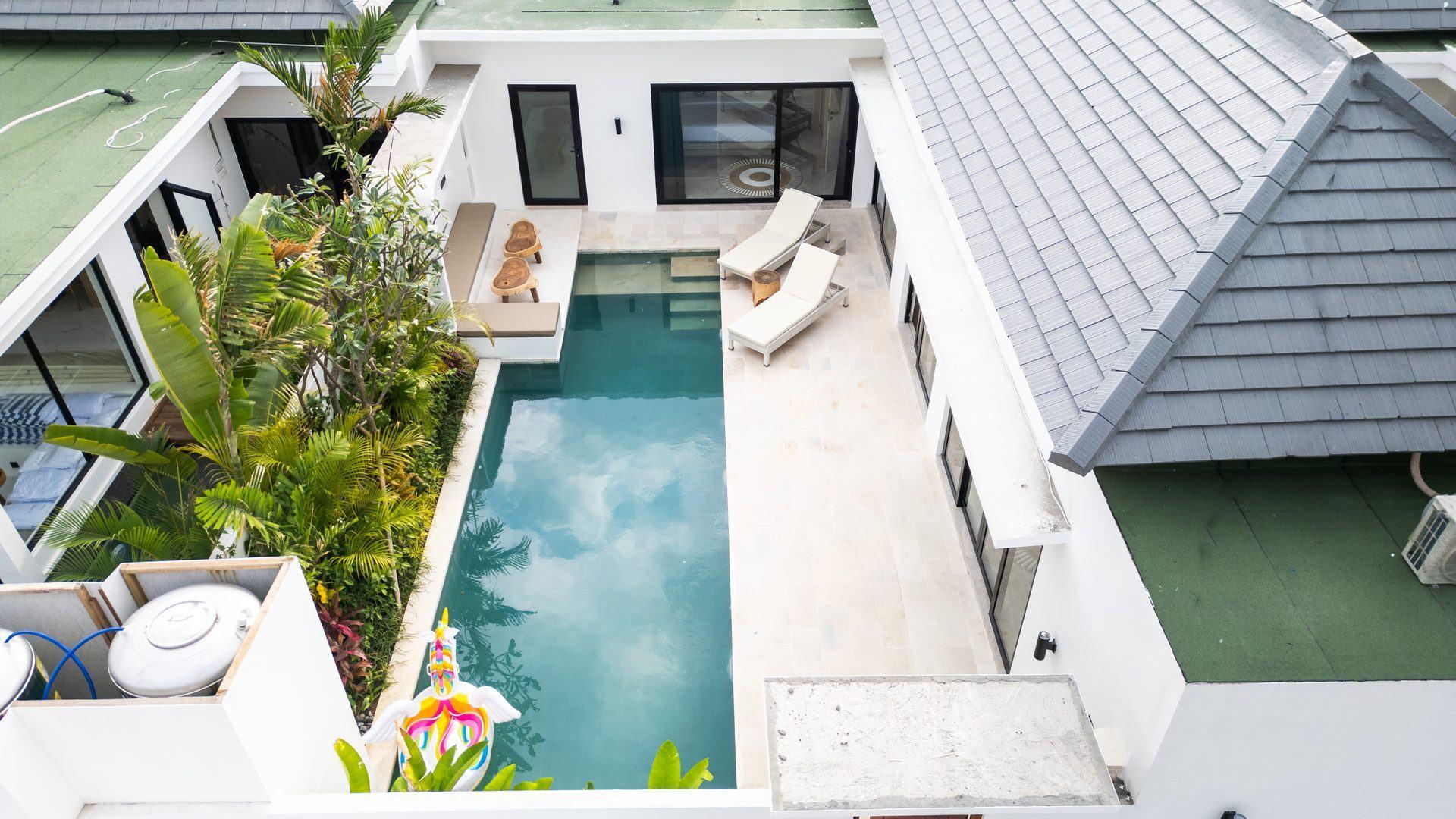
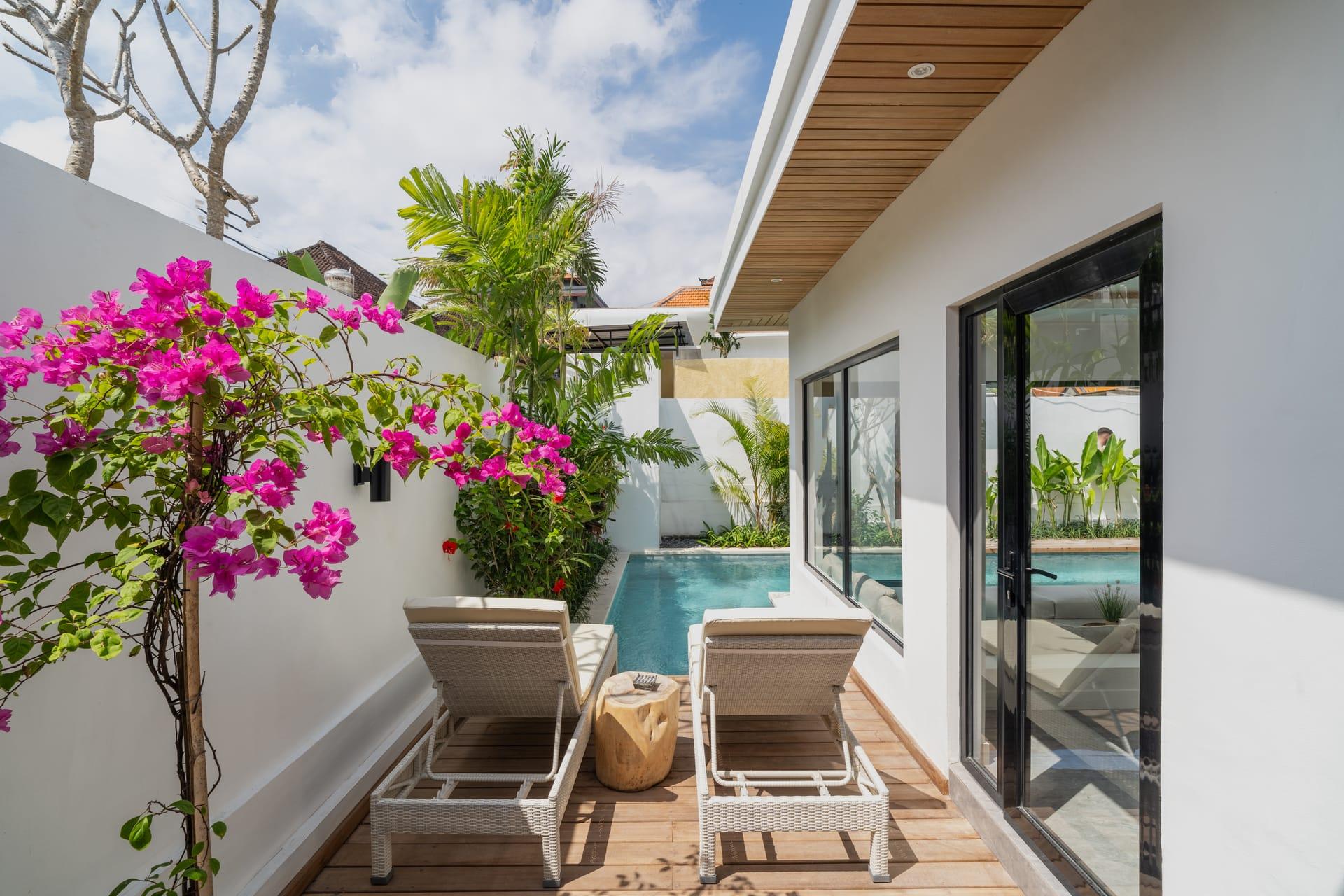
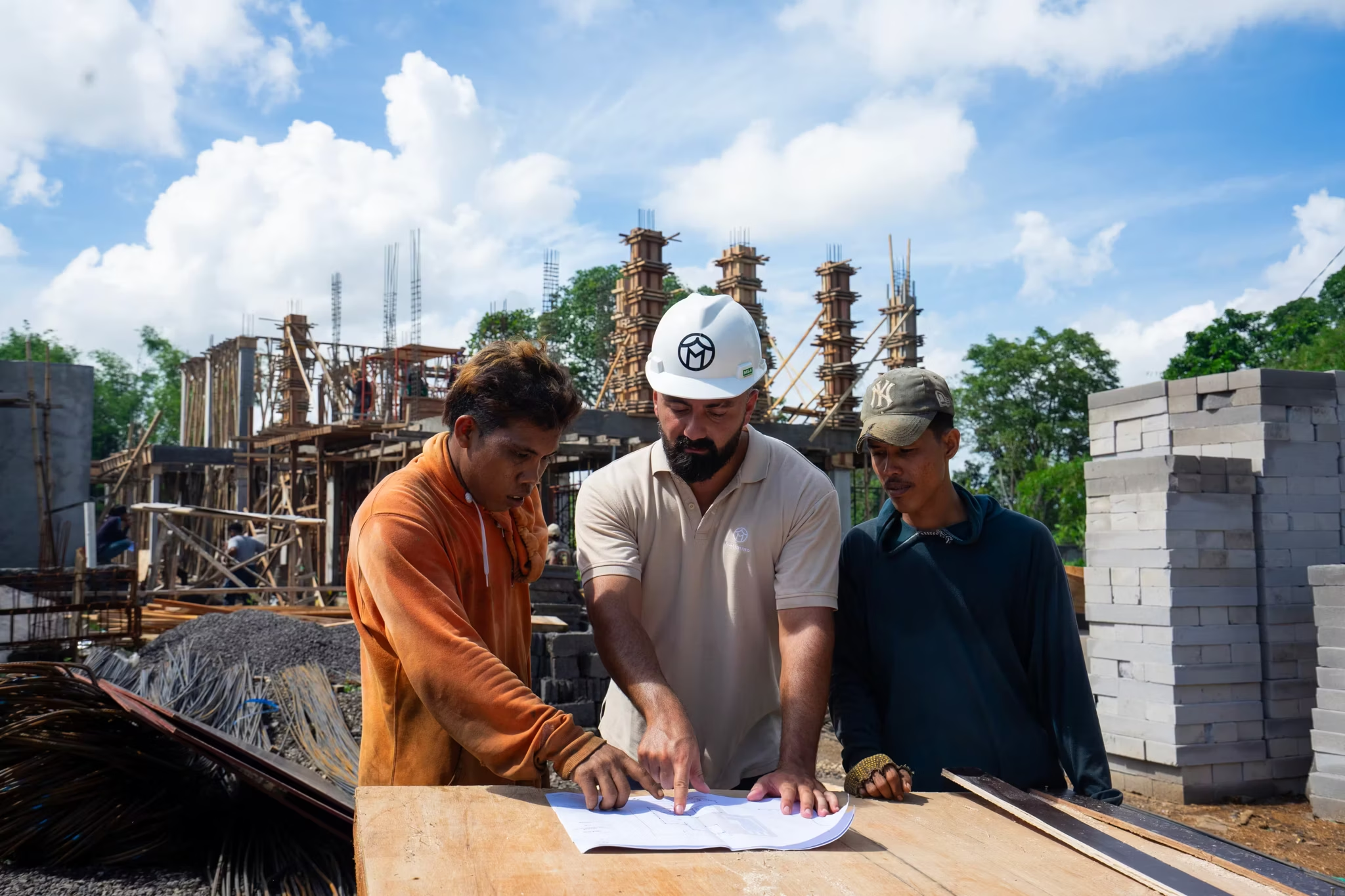
Investing in Uluwatu in 2026 means weighing net yields of 10 to 13% per year against land appreciation of +25 to 35% observed on coastal areas over 14-18 months. But between the legal structuring, the choice of micro-area (Bingin, Padang Padang, Pecatu, Ungasan) and remote rental management, the project demands a precise method. In this guide, I walk you through the updated legal framework, the real budgets, the yields by micro-area, PT PMA taxation and remote rental management, based on 90 villas delivered in Bali since 2021.
Key takeaways
- A turnkey 2-bedroom villa starts from 169.000 € in Uluwatu, with an entry ticket possible from 25.000 € through shared investment.
- The net yield of a well-positioned villa in Uluwatu sits between 10 and 13% per year, with an occupancy rate of around 75%.
- For short-term rental, the PT PMA is the standard structure; the nominee arrangement, on the other hand, must be avoided.
Contents (6 chapters)
- 01Why is Uluwatu a strategic place to invest in 2026?
- 02What rental yield can you expect from a villa in Uluwatu?
- 03What legal steps must a foreigner take in 2026?
- 04What budget should you plan to buy or build in Uluwatu?
- 05What risks should you anticipate and mistakes avoid in Uluwatu?
- 06How do you manage your Uluwatu villa remotely from abroad?
Why is Uluwatu a strategic place to invest in 2026?
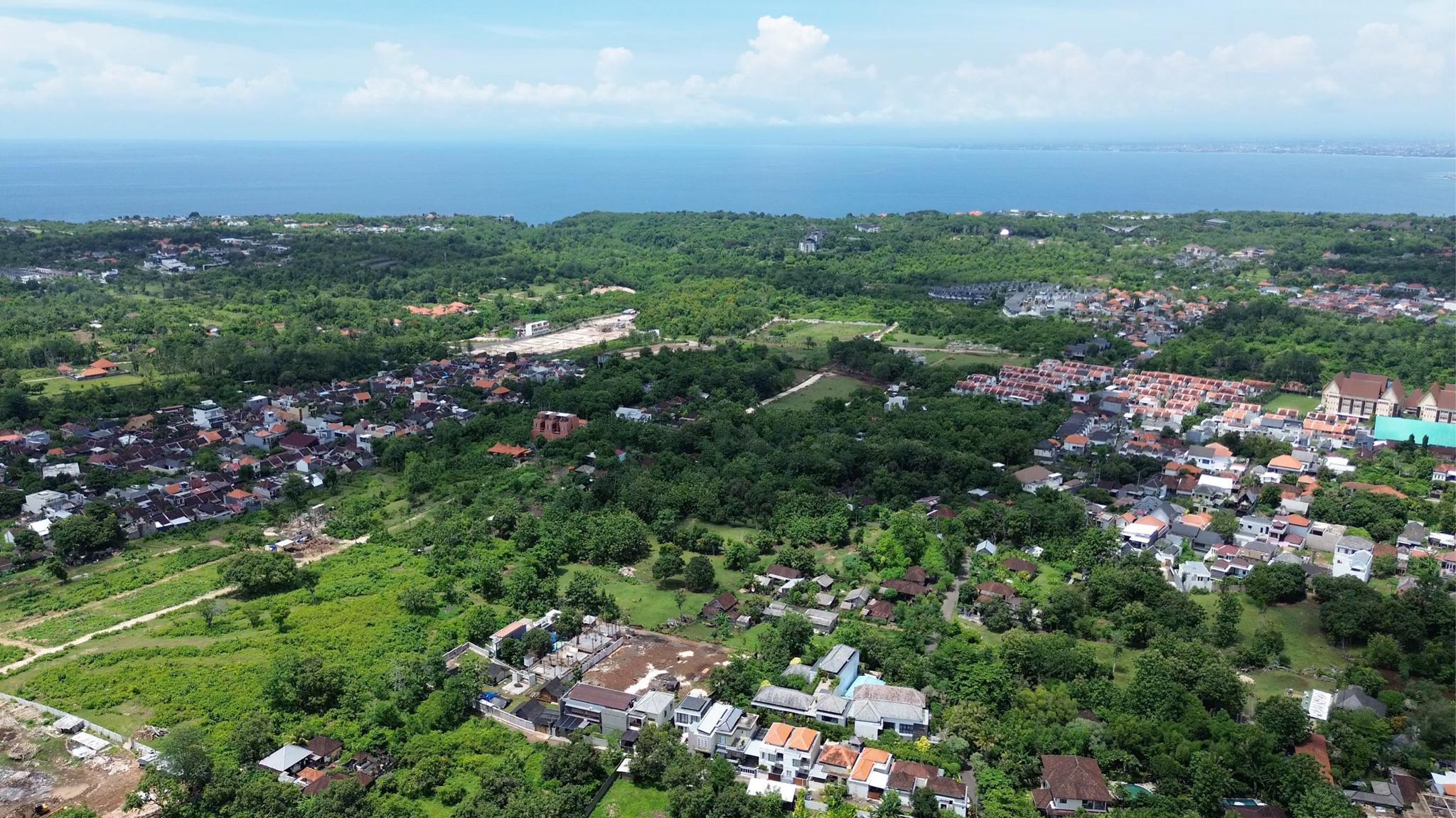
Uluwatu now captures Bali's premium clientele (affluent surfers, luxury couples, high-end digital nomads) with nightly rates positioned 30 to 50% above Canggu. The Bukit peninsula, its cliffs and its secluded beaches offer a land scarcity that the island's north-west areas have lost, 30 minutes from the international airport.
In 2025, Bali passed the threshold of 7 million international tourists (BPS, Statistics Indonesia, 2026), and foreign demand in the Badung district (which includes Uluwatu) jumped +92.1% vs 2022 according to Rumah123.
Concretely, Uluwatu is the natural choice for two profiles: investors targeting land capital gains over 5-7 years, and those aiming for a premium rental asset with a high nightly rate.
What rental yield can you expect from a villa in Uluwatu?
The net yield of a villa in Uluwatu sits between 10 and 13% per year, after rental management (18-25% of revenue), maintenance, taxes and vacancy. The advertised gross yield of 15-18% translates into net once these costs are factored in, which remains far above typical net rental yields in most Western markets.
Nightly rates vary by micro-area and season: between 350 € and 1.000 € on the premium villas managed by Balimmo, with peaks in May-September and December-January. The target average annual occupancy rate is around 75% on a well-positioned, well-managed villa.
Comparison of Uluwatu's micro-areas as observed on the ground:
- Bingin: net yield 10-12%, higher entry ticket, premium surf clientele
- Padang Padang: luxury positioning, net yield 9-11%
- Pecatu: best price/yield ratio, net 10-13%, developing area
- Ungasan: ocean-view luxury segment, net 8-10% but strong land appreciation
The choice depends on your profile: Pecatu for optimal yield, Ungasan for appreciation, Bingin for the recurring surf clientele.

What legal steps must a foreigner take in 2026?
Three legal routes exist for a foreign investor: a notarised leasehold (Hak Sewa, a 25-30 year renewable lease), Hak Pakai (personal right of use), or a PT PMA holding the land under Hak Guna Bangunan (HGB, 30 years renewable, the functional equivalent of a freehold over 60-90 years). For any short-term rental activity in Bali, the PT PMA is the standard structure; the nominee practice (Indonesian frontman) must be avoided.
The administrative journey follows five steps:
- Creation of the PT PMA: about 1 month, fees ~2.000 €
- Obtaining the NPWP (tax number) and NIB (registration number): 2-3 weeks
- Land acquisition (leasehold or HGB) with an Indonesian notary: 1 month
- PBG building permit (formerly IMB): 1 to 2 months
- Registration of the villa as tourist accommodation: 2-3 weeks
In practice, the PT PMA is not a complication, it is a protection: it secures the land title, the rental activity and the future resale.
Thinking about a project in Bali?
Our experts review your situation for free, with no commitment.
What budget should you plan to buy or build in Uluwatu?
A turnkey villa in Uluwatu starts from 240.000 € for a 2-bedroom, 260.000 € to 300.000 € for a 3-bedroom, and 330.000 € to 400.000 € for a 4-bedroom. For ocean-view luxury villas in the Bingin or Ungasan segments, the budget climbs up to 1.200.000 €. Balimmo shared investment lets you enter from 25.000 € on a pooled project.
In 2025, the average price per m² in Bali's premium segments (Canggu, Seminyak, Uluwatu) reaches around 3.220 €/m² according to Properstar, against a general range of 1.085 € to 1.538 €/m² across the rest of the island.
Typical breakdown of a turnkey villa project in Uluwatu:
- Land (leasehold or HGB via PT PMA): 30 to 40% of the budget
- Construction (structural work, finishes, pool): 45 to 55%
- Furnishing and decoration: 5 to 8%
- Legal fees, PT PMA, PBG permit: 3 to 5%
The choice between solo (169.000 €+) and shared (25.000 €+) depends on your investment capacity and your appetite for remote management.

What risks should you anticipate and mistakes avoid in Uluwatu?
Three mistakes account for most of the disputes observed in Bali: an illegal nominee arrangement (now explicitly to be avoided), buying land in a non-buildable agricultural zone, and underestimating administrative timelines. In Uluwatu, two specific risks are added: cliff plots requiring geotechnical studies, and strict building height regulations (15 metres maximum).
Due diligence before any payment must verify:
- Official zoning (orange/red tourist zone vs green agricultural zone)
- Land certificate (SHM for Indonesian freehold, SHGB for HGB)
- Road access, water, electricity, grid connection
- Status of the PBG permit (formerly IMB) if the plot is already built
- Geotechnical study for cliff plots
To compare investment areas in Bali, the detailed analysis in investing in Canggu sheds light on the differences in yield profile and land saturation between the island's two premium hubs.
How do you manage your Uluwatu villa remotely from abroad?
Professional rental management represents 18 to 25% of gross income, but it makes it possible to reach around 75% occupancy versus 40-50% with amateur self-management. The local manager handles multi-platform listings (Airbnb, Booking, Vrbo), seasonal yield management, guest welcome, cleaning, maintenance and monthly financial reporting.
Uluwatu's guest profile is made up mainly of Australians (~24% of arrivals to Bali according to the tourism office), Europeans (France, Germany, UK), and Americans. The average length of stay is 5 to 7 nights, with occupancy peaks in May-September and December-January.
In practice, remote management works on one condition: appointing an operator based on the ground with a stable team. Without that, the occupancy rate drops, maintenance slips and the net yield collapses.
Frequently asked questions
Yes, through the shared investment formula, which lets you acquire a share of a rental villa from 25.000 €, with pooled yield and integrated management. The land project and the construction are pre-selected by Balimmo, so the investor enters a structured asset without having to set up a PT PMA on their own.
Taxation runs through the PT PMA: 0.5% of revenue for the first three years, then 11% on net profit thereafter. On resale, 10% of the total price via the PT PMA. In your home country, repatriated dividends are taxed under local rules (for French residents, the flat tax of ~30%), with double taxation treaties such as the France-Indonesia treaty preventing income from being taxed twice. See our legal structuring.
The total timeline (design, PBG permit, construction, furnishing) is 14 to 18 months. Construction alone takes 12 months for a 2-bedroom, 13 months for a 3-bedroom, 14 months for a 4-bedroom. On cliff plots, allow an extra 1-2 months for geotechnical studies. Details on our villa construction.
Uluwatu targets the premium nightly rate (350 €-1.000 €) and land capital gains in a less saturated area. Canggu offers superior rental liquidity and an established digital nomad community, with a slightly higher net yield (11-12%). Detailed comparison in our analysis investing in Canggu.
The acquisition can be completed entirely remotely via notarised power of attorney and a PT PMA. In our files, about 60% of investors finalise their project without travelling. A site visit remains recommended to validate the micro-area and the plot. Our Balimmo ebook details the complete remote acquisition method.
Conclusion
Investing in Uluwatu in 2026 remains profitable and legally feasible for a foreigner, provided you respect three fundamentals: structure through a PT PMA, choose the right micro-area (Bingin, Padang Padang, Pecatu or Ungasan depending on your profile), and secure remote rental management with a stable local operator.
With land appreciation of +25 to 35% observed over 14-18 months and a net yield of 10 to 13% per year, investing in Uluwatu offers a capital-gain/yield combination that is rare in the premium Asian market. The entry ticket starts at 169.000 € for a solo villa, or 25.000 € through shared investment.
The real variable is not the market, it is the method: clean legal structuring, serious land due diligence, and a reliable management operator. To go further, the Bali property guide covers the island's macro framework.