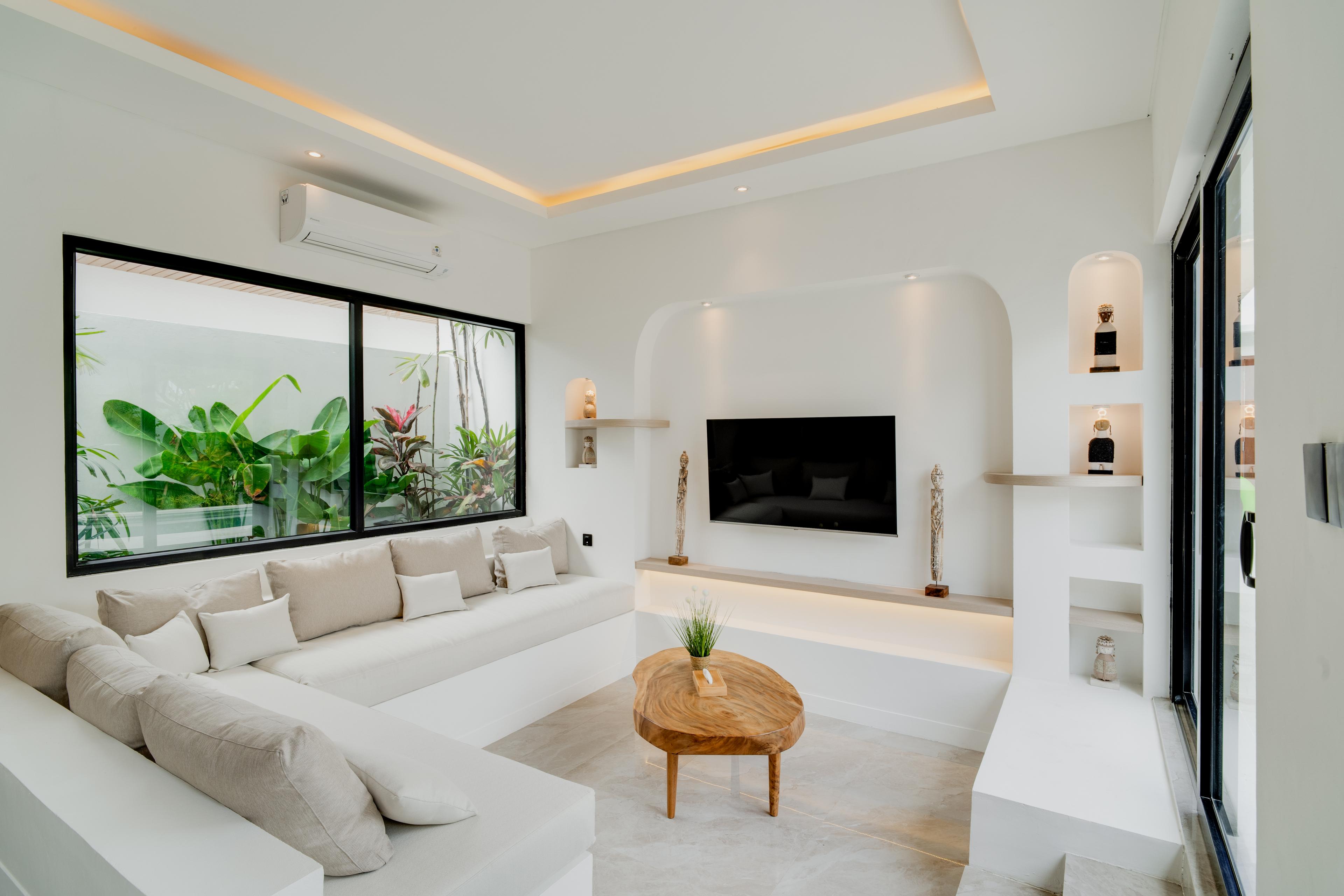
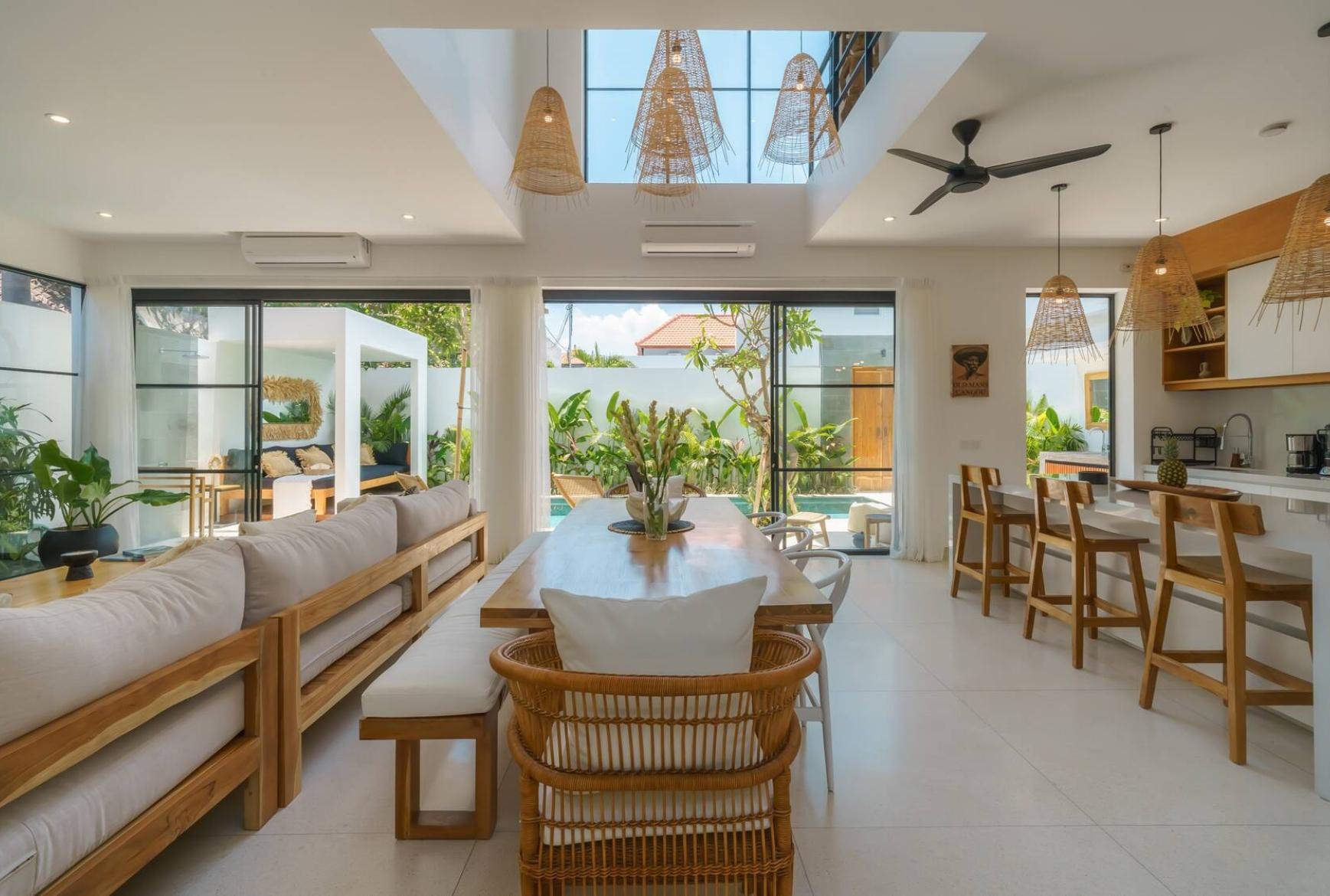
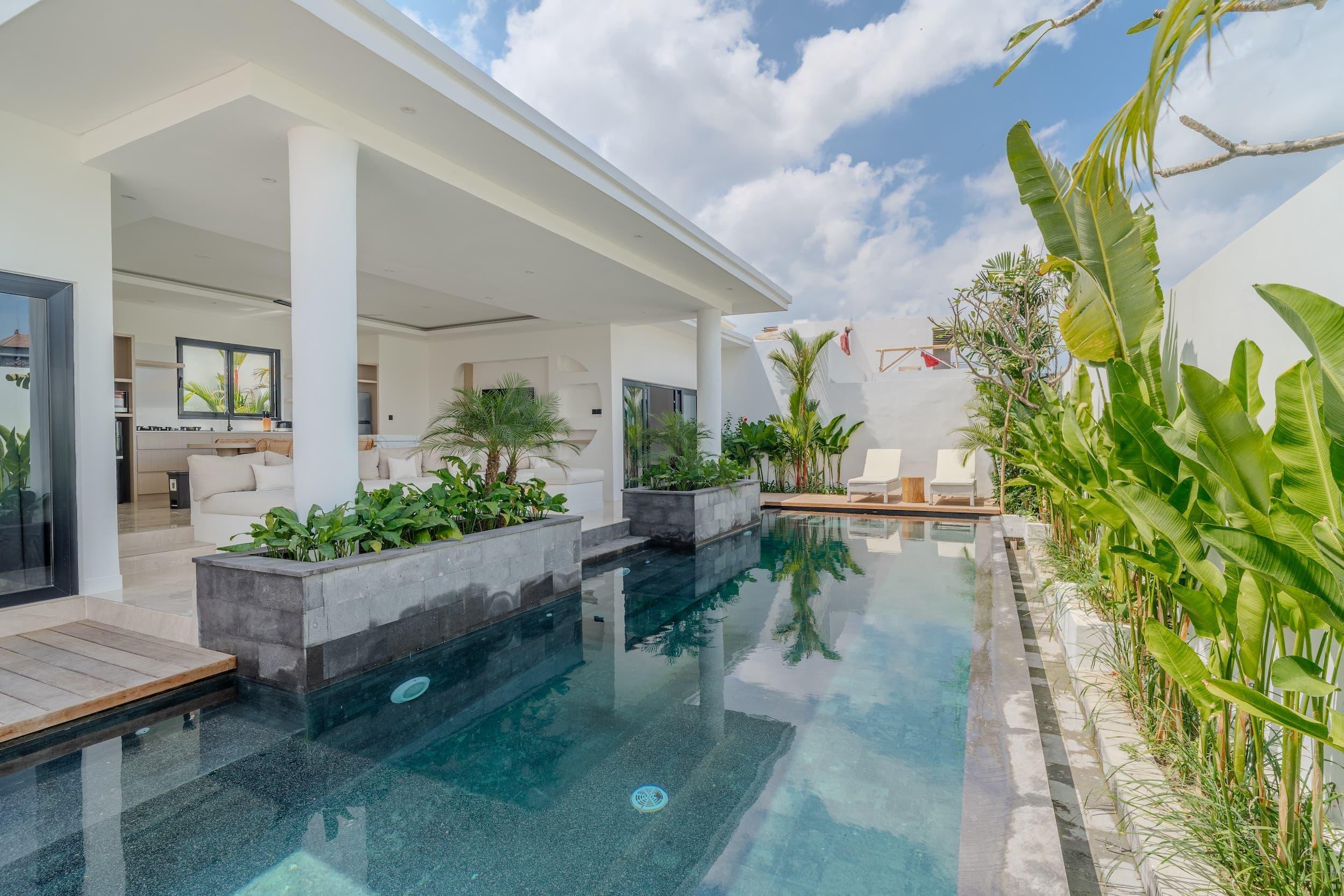
Investing in Seminyak in 2026 means targeting the most mature area of Bali, with net yields of 10 to 13% per year and an occupancy rate of around 75% on well-positioned villas. But behind these numbers, it is the legal structuring and the land due diligence that make the difference between a secured asset and a fragile setup. In this guide, I walk you through the legal framework that applies to foreigners (PT PMA, leasehold, Hak Pakai), the real yields observed on our villas, the tax picture for international investors, the concrete risks and the practical steps to buy or build a villa in Seminyak.
À retenir
- A 3-bedroom villa in Seminyak generates a net yield of 10 to 13% per year, with an entry ticket starting at 290.000 € turnkey and a payback period of 8-9 years.
- Occupancy rates in Seminyak reach around 75% in high season, supported by 7 million international visitors to Bali in 2025.
- Accessible entry ticket from 25.000 € through our shared investment solution, without managing the legal structure yourself.
Contents (6 chapters)
- 01Why does Seminyak remain a strategic place to invest in 2026?
- 02What rental yields can you expect from a villa in Seminyak?
- 03Which legal structures can a foreigner use to invest in Seminyak?
- 04What are the real risks in Seminyak and how do you mitigate them?
- 05What taxation applies to a foreign investor in Seminyak in 2026?
- 06What are the concrete steps to invest in Seminyak in 2026?
Why does Seminyak remain a strategic place to invest in 2026?
Seminyak concentrates Bali's high-end clientele thanks to its density of restaurants, beach clubs and boutiques, with land that has become scarce. In 2025, Bali recorded 7.05 million international visitors, an all-time record (Le Petit Journal Bali, 2026), a disproportionate share of whom pass through Seminyak for shopping and premium dining.
Compared with Canggu (younger, more saturated on the surf and digital nomad segment), Ubud (cultural, lower ADR) or Uluwatu (emerging luxury), Seminyak keeps the highest average ADR on the island in the villa segment. Land there runs between 520 € and 730 € per m², versus 600 € to 830 € in Canggu and over 1.000 € in Berawa.
In practice, choosing Seminyak suits investors who prioritise resale liquidity and maximum ADR on a premium villa.
What rental yields can you expect from a villa in Seminyak?
A well-positioned 3-bedroom villa in Seminyak generates 70.000 € to 90.000 € in gross annual rental income, meaning a gross yield of 12 to 18% and a net yield of 10 to 13% after management, maintenance, taxes and furniture depreciation. Villas in Seminyak show an occupancy rate of around 75% in high season (Prestige Property Bali, 2026), in line with our internal observation of around 80%.
The breakdown rests on three variables: an average ADR of 250 € to 400 € per night depending on seasonality, 280 to 310 nights rented per year, and management costs that absorb 15 to 20% of revenue. By comparison, these figures sit far above the typical net rental yields achievable in most Western property markets.
Which legal structures can a foreigner use to invest in Seminyak?
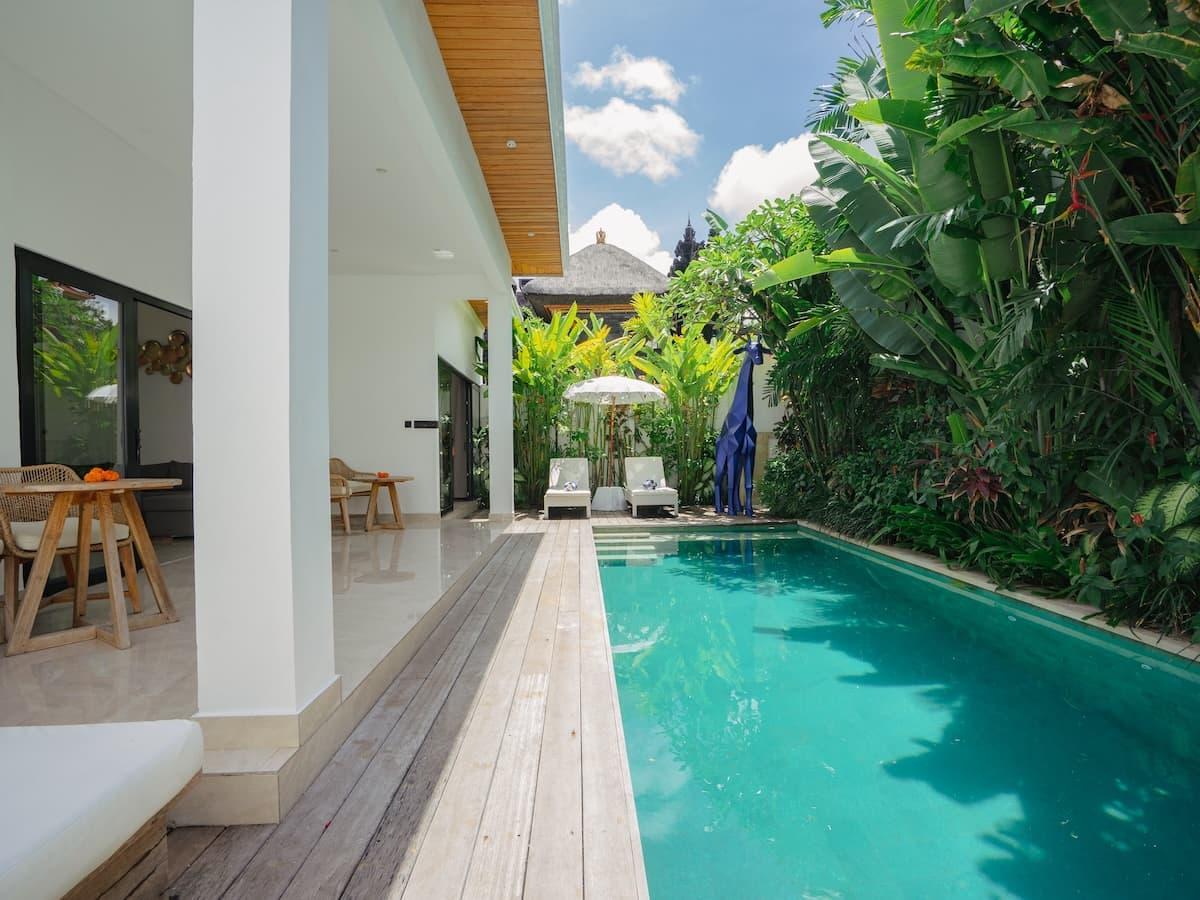
Three legal routes are open to a foreign investor: a leasehold (Hak Sewa) of 25 to 30 years, renewable, Hak Pakai (right of use), or a PT PMA (foreign-owned company) for rental operation. The PT PMA is the standard structure for declared short-term rental activity.
The PT PMA allows you to hold a Hak Guna Bangunan (HGB) for up to 80 cumulative years, to invoice in your own name, to legally repatriate income and to resell smoothly. A leasehold remains a simpler alternative, but less liquid on resale. The role of the PPAT notary is central: they are the one who verifies the SHM title chain and zoning compliance. To go further, see our guide to legal setup in Bali.
In practice, the choice comes down to this: leasehold if you want to minimise administrative complexity, PT PMA if you are targeting short-term rental and a patrimonial resale.
Thinking about a project in Bali?
Our experts review your situation for free, with no commitment.
What are the real risks in Seminyak and how do you mitigate them?
Three major risks shape projects in Seminyak: contested SHM titles, non-compliant PBG permits, and builders without any warranty comparable to the structural guarantees standard in Western markets. From what we observe daily, projects taken over mid-course show construction defects in 30% of cases on sites initially entrusted to unregistered operators.
On the legal side, the recurring traps are:
- Contested SHM title or a seller who is not the real owner
- Zoning incompatible with tourist rental (yellow or green zone)
- Nominee arrangement (Indonesian frontman), illegal for a long time now
- PBG permit missing or not matching the as-built plans
- Construction contract without payment milestones tied to site progress
Notarial due diligence is non-negotiable: verification of the title chain over 20 years, cadastral checks, zoning validation with the local authorities. On the construction side, demand a documented site review every two weeks and written contractual penalties.
What taxation applies to a foreign investor in Seminyak in 2026?
Indonesia has double taxation treaties with many Western countries, including France (treaty of 14 September 1979), which prevent rental income from being taxed twice. In practice, taxation plays out on two levels.
On the Indonesian side, through a PT PMA, the regime is very favourable: 0.5% of revenue during the first 3 years of activity, then 11% on net profit beyond that. The local VAT (PB1) of 10% is collected from the guest and paid to the tax administration. On resale, taxation is 10% of the total sale price via a PT PMA, versus 20% in your personal name.
On the home-country side, dividends repatriated to your personal account are taxed under your country of residence's rules, with the applicable tax treaty typically granting a credit that neutralises double taxation. For French tax residents, for example, dividends fall under a flat tax of about 30%, offset by the treaty tax credit. Depending on your assets, the trade-off between direct ownership via a PT PMA and interposing a holding company in your home country deserves dedicated tax advice. Our free ebook on property investment in Bali details the complete tax structures.
What are the concrete steps to invest in Seminyak in 2026?
A turnkey 3-bedroom villa project in Seminyak runs over 14 to 18 months, including 12 to 13 months of pure construction. The timeline involves five phases:
- Land search and due diligence: 1 to 2 months
- PT PMA structuring and notarial completion: 1 month, in parallel
- Architectural design and PBG permit: 2 to 3 months
- Construction of the 3-bedroom villa: 13 months
- Furnishing and handover to rental management: 1 month
The standard entry ticket starts at 290.000 € for a turnkey 3-bedroom villa (land, construction, permits, PT PMA and furnishing included). For a more accessible budget, our Balimmo shared investment solution opens access to the market from 25.000 € by pooling land and construction on pre-selected projects.
In practice, what we observe is that a project properly framed from the start (validated land, a clean PT PMA, a rock-solid construction contract) runs without surprises. Overruns almost always come from a rushed upstream phase.
Frequently asked questions
The standard entry ticket is 290.000 € for a turnkey 3-bedroom villa (land, permits, PT PMA, construction and furnishing included). For a more accessible budget, shared investment lets you enter from 25.000 € on pooled, pre-selected projects. Details on our shared investment in Bali.
With a net yield of 10 to 13% observed on well-positioned 3-bedroom villas, the initial capital is paid back in 8 to 9 years, excluding resale capital gains. Adding land appreciation of 6 to 8% per year, the total wealth return exceeds 15% annualised. See our villa management in Bali.
Yes, through the PT PMA structure the net income flows back as dividends to your personal account. Indonesia's double taxation treaties, such as the France-Indonesia treaty of 14 September 1979, prevent double taxation through a tax credit mechanism. Repatriation is legal, traceable and fully banked. See our legal setup in Bali.
Construction of a 3-bedroom villa takes 13 months. Including land search, legal structuring and PBG permits, allow 14 to 18 months between signature and rental launch. Details on our villa construction in Bali.
With annual appreciation of 6 to 8% since 2021 and sustained foreign demand, resale takes 6 to 12 months via a PT PMA transfer or leasehold assignment, handled with the PPAT notary. The sale tax via a PT PMA is 10% of the total sale price, versus 20% in your personal name. See our legal support.
Conclusion
Investing in Seminyak in 2026 means betting on the most mature area of Bali: occupancy rates around 75%, net yields of 10 to 13% and land appreciation of 6 to 8% per year since 2021. The entry ticket starts at 290.000 € for a solo villa, or 25.000 € through shared investment.
The real variable is not the advertised yield, it is the reliability of the setup: a clean PT PMA, serious land due diligence, a construction contract with milestones and penalties. To go further on the Bali market, see also our guides investing in Canggu and investing in Uluwatu.
With 7.05 million international visitors to Bali in 2025 and land becoming scarcer, the practical question becomes: with which experienced local team do you structure the project to secure the full 14 to 18 month cycle?