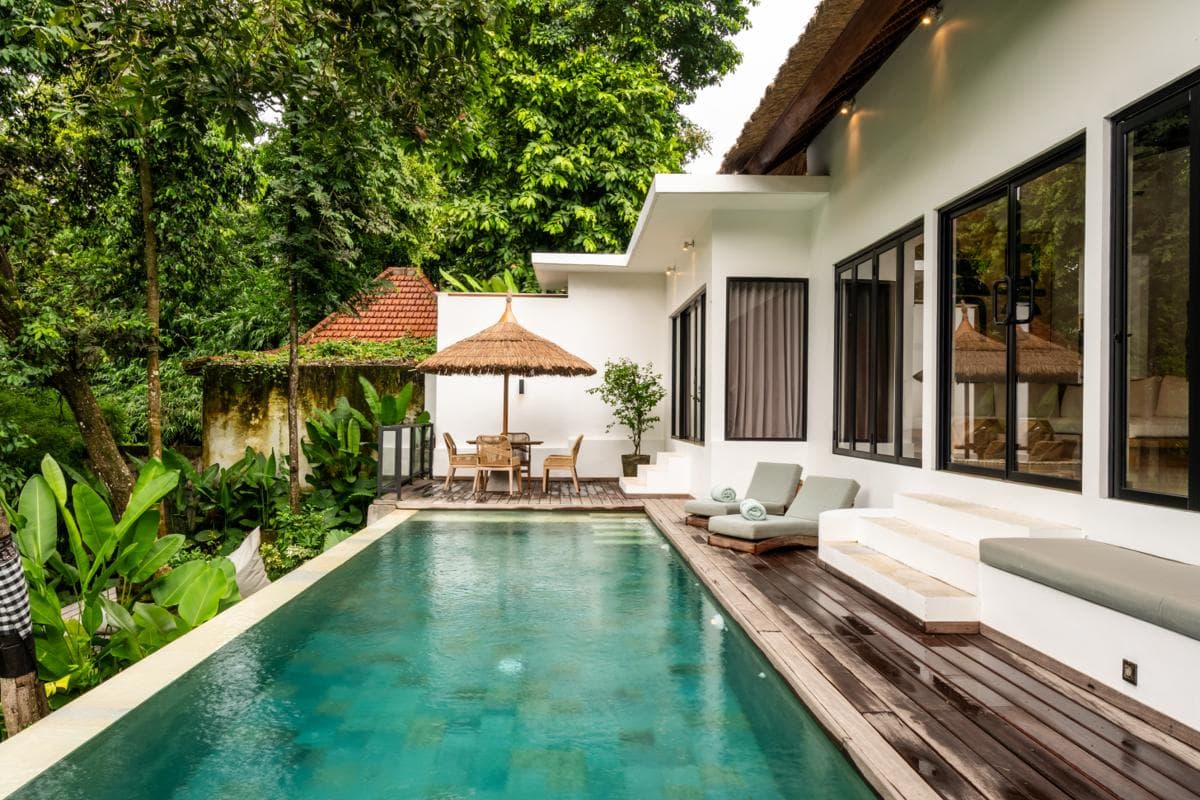
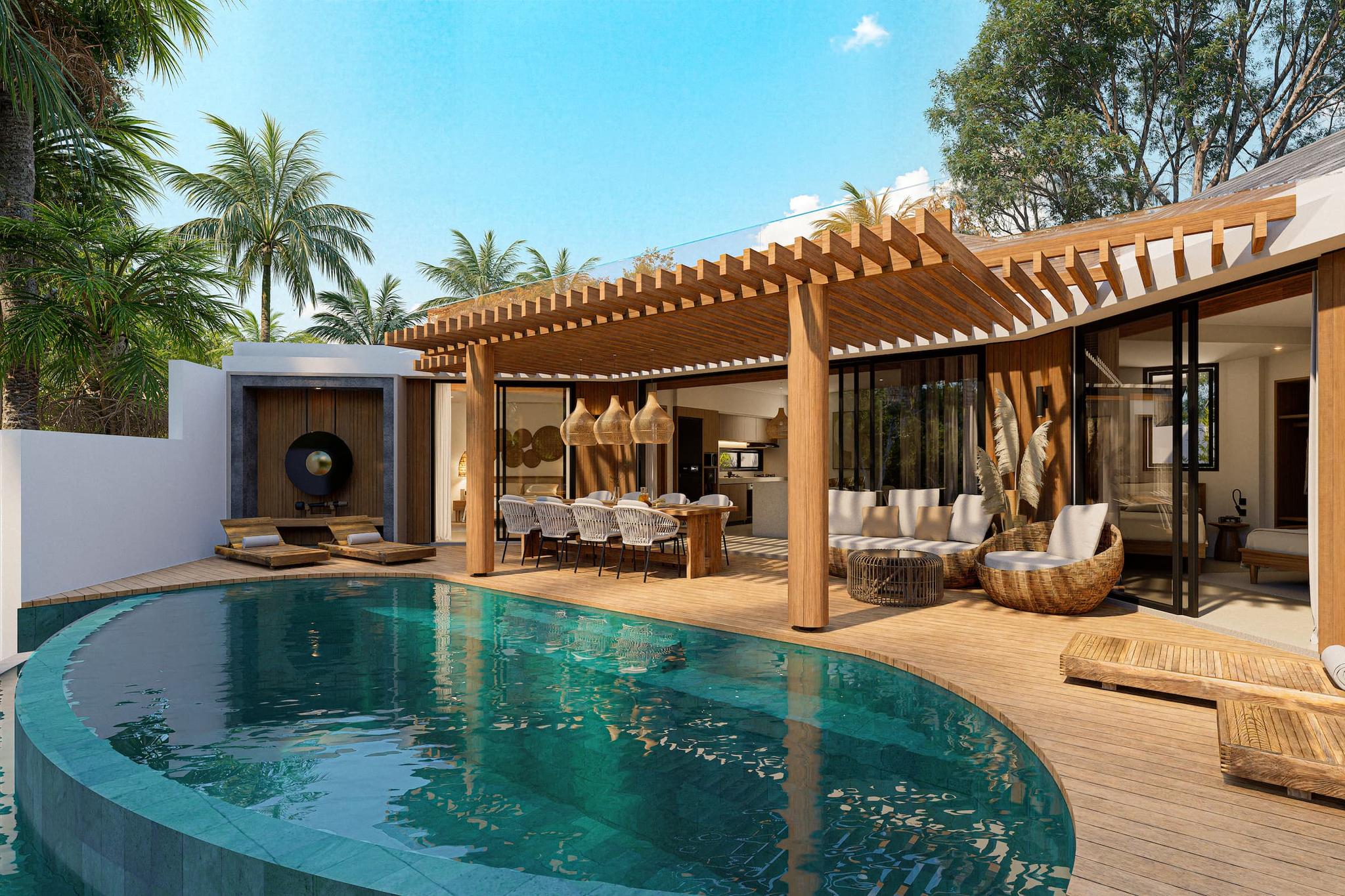
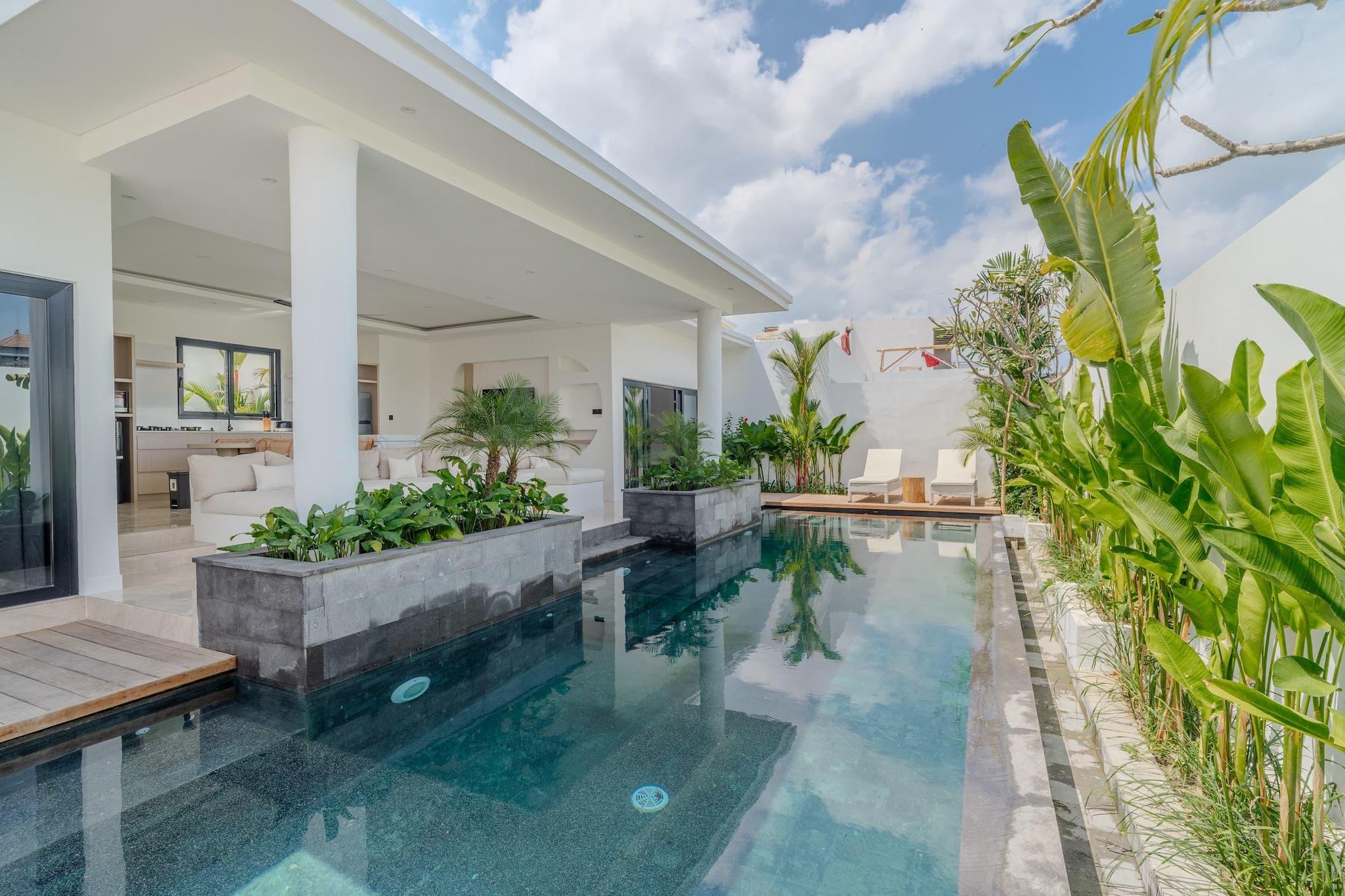
Investing in Ubud in 2026 means weighing net yields of 10 to 13% per year against a demanding Indonesian legal framework. Wellness demand, digital nomads and international retirees support an occupancy rate of around 75%, but Balinese land hides traps (agricultural zoning, nominee arrangements, PBG permits). In this guide, I walk you through the legal framework that applies to foreigners (leasehold or PT PMA), the real budgets in Ubud in 2026, the yields observed on our construction sites and the concrete steps to run a project remotely from abroad.
Key takeaways
- The net yield of a well-positioned villa in Ubud sits between 10 and 13% per year, with an occupancy rate of around 75%.
- A turnkey villa project starts at 240.000 € (2 bedrooms), or from 25.000 € through Balimmo shared investment.
- A foreigner invests legally through a notarised leasehold (25-30 years) or a PT PMA (foreign-owned company).
Contents (6 chapters)
- 01Why invest in Ubud rather than elsewhere in Bali in 2026?
- 02What rental yield can you expect from a villa in Ubud?
- 03How can a foreigner invest legally in Ubud?
- 04What risks are specific to investing in Ubud?
- 05What taxation applies to rental income in Ubud?
- 06How do you run a villa project in Ubud from abroad?
Why invest in Ubud rather than elsewhere in Bali in 2026?
Ubud combines three assets that are rare on the island: a premium clientele with little seasonality (wellness, yoga, spiritual retreats, long-stay remote work), land that is 30 to 40% cheaper than Canggu for equivalent accessibility, and rental demand that withstands the monsoon thanks to medium-length stays.
In 2025, Bali recorded 6,948,754 foreign tourist arrivals, a 9.72% increase over 2024 according to the Bali Central Bureau of Statistics (BPS Bali, 2026). This momentum feeds directly into the occupancy rate observed in Ubud.
On the ground, here is what we see: while Canggu takes a clear dip in November-February, Ubud absorbs the flow of wellness stays and digital nomads who stay 2 to 8 weeks. The result: rental income that is smoother over 12 months, and therefore more predictable when modelling a return on investment.
What rental yield can you expect from a villa in Ubud?
Well-positioned villas in Ubud deliver 10 to 13% net yield per year, after rental management, OTA commissions, maintenance and Indonesian taxes. That is several times the typical net yield of a city apartment in most Western markets, for a comparable entry ticket.
As in any rental market, gross yield translates into net after the usual costs: rental management (15 to 20% of revenue), platform commissions (15%), pool and garden maintenance (5%), PT PMA taxation. For a 169.000 € 2-bedroom villa with an average ADR of 110 € and 75% occupancy, gross annual income comes to around 32.000 €.
According to AirDNA data cited by Selexium, the average occupancy rate for rental properties in Ubud stands at around 75% in 2025, driven by constant demand from international tourists and digital nomads (Selexium, 2026). In practice, on our delivered projects, the full payback (construction included) comes out at around 8 to 9 years.
How can a foreigner invest legally in Ubud?
Three legal routes are open to a foreign investor: a notarised leasehold (Hak Sewa, 25 to 30 years, renewable), Hak Pakai (right of use, 30 years), or a PT PMA (foreign-owned company holding the land under HGB). The PT PMA is the standard structure for operating short-term rentals in Bali.
The leasehold remains the simplest solution if the objective is asset holding without tourist operation. Notarised signing with a PPAT in 4 to 6 weeks, notary fees around 1% of the lease price. The classic Balimmo solution: a 30-year lease with a 10-year renewal option.
The PT PMA offers the functional equivalent of a freehold: 60 to 90 years of tenure under HGB with tacit renewal. Set up in about 1 month, fees around 2.000 €, annual accounting of a few thousand euros. It is the standard structure for legal short-term rental.
Thinking about a project in Bali?
Our experts review your situation for free, with no commitment.
What risks are specific to investing in Ubud?
The main risk in Ubud is not natural, it is land-related. The region has a significant share of green zones (rice fields classified as agricultural) where building a rental villa is prohibited. Without an upstream zoning audit, you end up signing for an unusable plot.
The risks to map before signing:
- Agricultural zoning (green zone): building a rental villa is prohibited, avoid the plot even if the price is tempting
- Nominee arrangement (Indonesian frontman): illegal and exposed to confiscation
- PBG permit (formerly IMB) not secured: construction blocked, resale impossible
- Rainy season November-March: occupancy down 15 to 20%, to be factored into the model
- Moderate seismicity: anti-seismic standards mandatory in the architectural design
On our construction sites, here is what we observe: roughly 1 in 3 plots visited in Ubud has zoning that is incompatible with short-term rental. A zoning audit and a validated PBG permit upfront eliminate most of the project risk.
What taxation applies to rental income in Ubud?
The taxation of a PT PMA operating a rental villa is particularly favourable for the first 3 years: 0.5% of revenue (final PPh regime for SMEs), then 11% on net profit beyond that. On resale, the PT PMA pays 10% of the total sale price, versus 20% in your personal name.
On the home-country side, income repatriated as dividends is taxed under your country of residence's rules, with double taxation treaties typically providing a tax credit. For French residents, for example, the flat tax (~30%) applies with a tax credit under the France-Indonesia tax treaty of 1979, so income is never taxed twice.
Concretely, for a villa generating 30.000 € of revenue in year 1, the Indonesian tax is 150 € (0.5% of revenue). A very long way from the 11% of revenue paid in your personal name.
How do you run a villa project in Ubud from abroad?
A turnkey villa project in Ubud can be run in 14 to 18 months from abroad, with no travel required thanks to notarised powers of attorney. The full cycle involves five phases:
- Land search and due diligence: 1 to 2 months
- PT PMA structuring and notarial completion: 1 month, in parallel
- Architectural design and PBG permit: 2 to 3 months
- Construction of a 2-bedroom villa: 10 to 12 months
- Furnishing and handover to rental management: 1 month
The entry ticket starts at 240.000 € for a turnkey 2-bedroom villa (land + construction + permits + PT PMA + furnishing), or 290.000 € for a 3-bedroom. For first-time investors or wealth-building profiles who want to test the market without full commitment, Balimmo shared investment opens the door from 25.000 € by pooling land and construction on pre-selected projects.
Frequently asked questions
The entry ticket starts at 25.000 € through shared investment (pooled land + construction on pre-selected projects), or at 240.000 € for an individual turnkey 2-bedroom villa. The first suits a first-time investor, the second a wealth-building profile who wants full control of their asset. Details on Balimmo shared investment.
Canggu shows a higher ADR but more pronounced seasonality (Nov-Feb dip). Ubud delivers more stable occupancy over 12 months and land that is 30 to 40% cheaper. In net terms, the yield is comparable (10-13%), with a different risk profile. Detailed comparison in our guide investing in Canggu.
Construction of a 2-bedroom villa takes 10 to 12 months, 12 to 13 months for a 3-bedroom, 13 to 14 months for a 4-bedroom. Adding land search, PBG permits and furnishing, the total turnkey timeline comes to 14 to 18 months. See the details on our architectural design.
Rents are collected on the PT PMA's Indonesian account, taxed at 0.5% of revenue for the first 3 years, then distributed as dividends to your home country. Your country of residence's taxation applies, with a tax credit under the relevant treaty (for French residents, the flat tax of ~30% under the France-Indonesia treaty of 1979). No double taxation. Full method on our legal management.
Yes, the secondary market is active in Ubud, driven by 6.95 million foreign arrivals to Bali in 2025 and rising expatriate demand. Resale involves either the residual leasehold or the PT PMA shares. Observed appreciation: +6 to 8% per year on our resold projects. More analysis in our Bali investment ebook.
Conclusion
Property in Ubud in 2026 combines an occupancy rate of around 75%, a realistic net yield of 10 to 13%, particularly favourable PT PMA taxation (0.5% of revenue for 3 years) and a legal framework that is fully accessible to foreign investors.
The real filter is neither the market nor the yield: it is the rigour of the upstream setup. Zoning audit, secured PBG permit, a clean PT PMA. Without these three foundations, even the finest villa becomes a fragile asset.
With 6.95 million foreign arrivals to Bali in 2025 and the island's economy growing at 5.82%, the question for 2026 is no longer whether Ubud is profitable, but which structure (individual from 169.000 € or shared from 25.000 €) matches your wealth-building horizon.