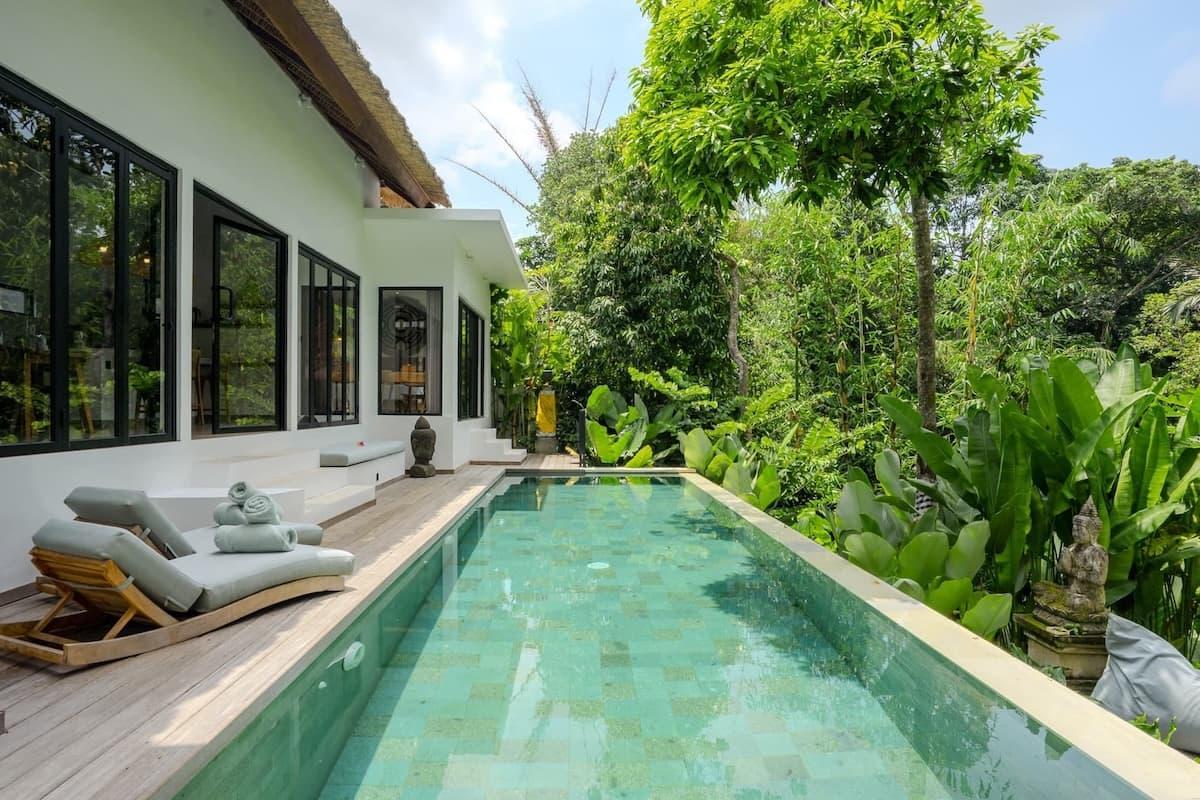
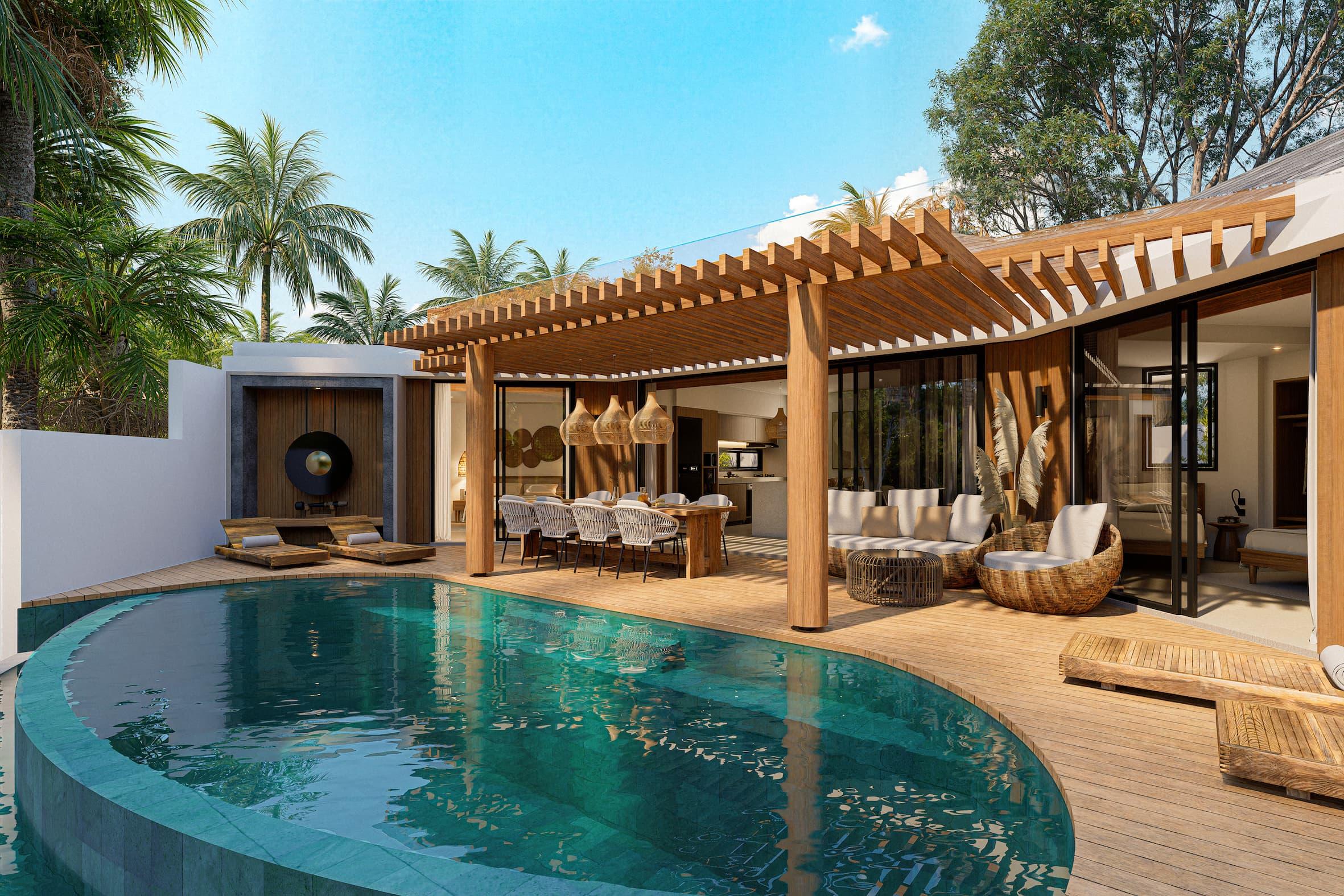
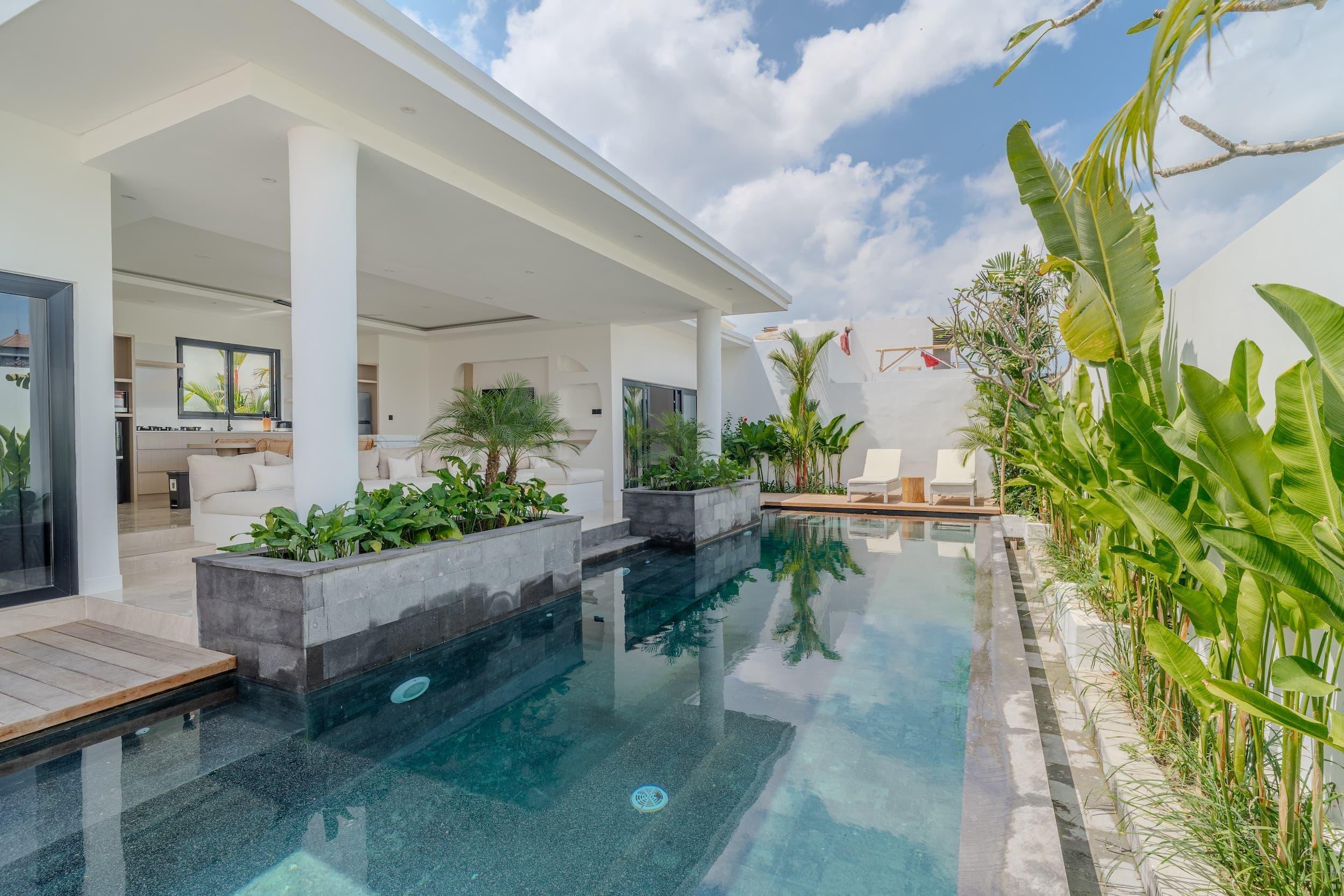
Living in Bali is a dream for many, and the island delivers on a good part of its promises: a cost of living 40 to 60% lower than in Western Europe, warm weather all year round and a large international community. But moving there takes preparation: the right residence permit, a realistic budget for your district, and housing that fits your pace of life. In this guide, I give you the real budgets, the simplest way to live in Bali legally, the districts by profile, and the question everyone who stays ends up asking: rent or build.
Key takeaways
- Budget: from 920 € per month minimalist, around 1.200 € to live comfortably alone, 2.000 € to 2.500 € for a European standard and around 3.000 € for a comfortable couple in a private villa.
- With a villa held through a PT PMA, the investor KITAS is the simplest way to live in Bali: 2 years, renewable, for you, your spouse and your children.
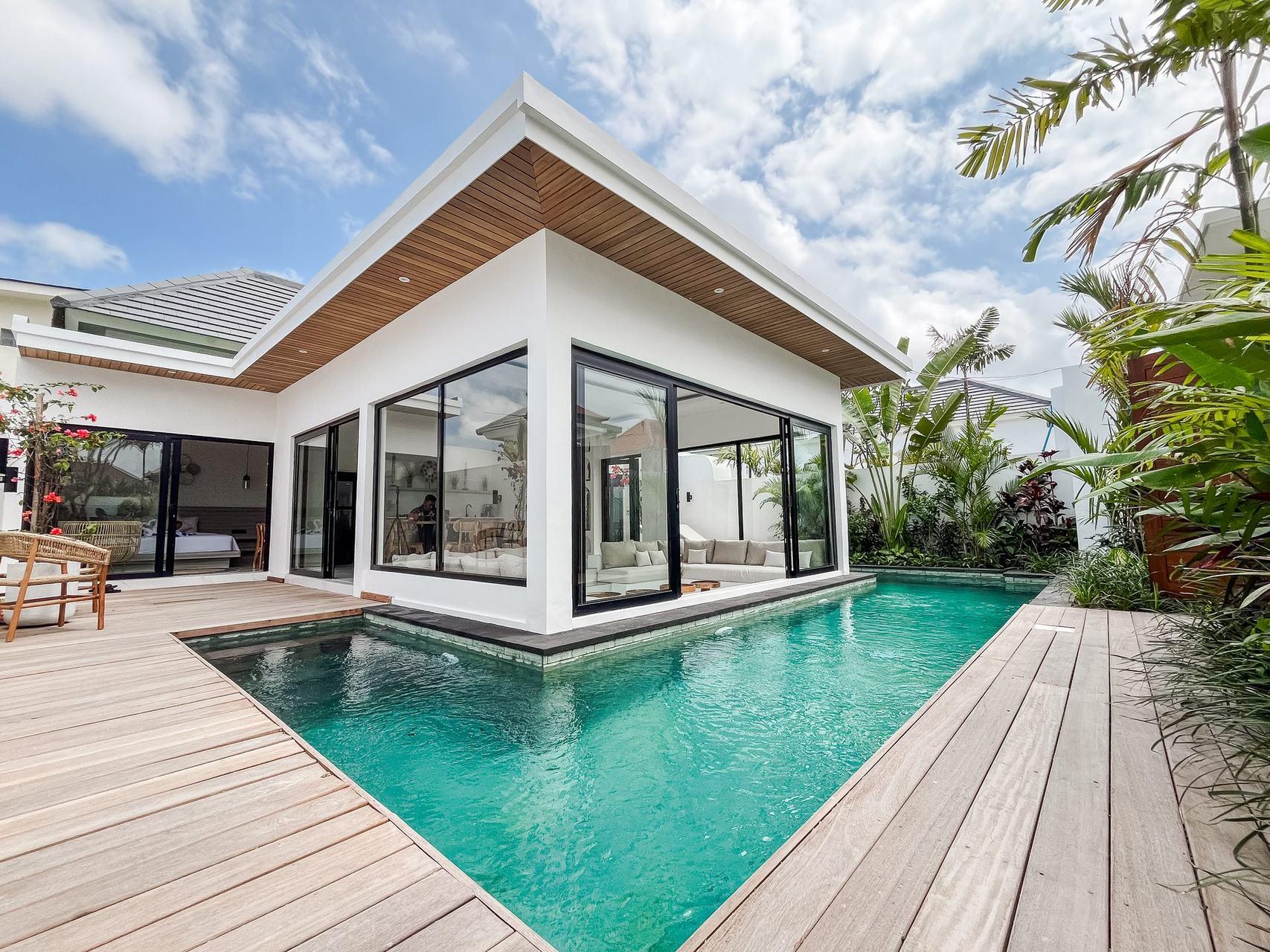
- A turnkey villa starts at 169.000 € (one bedroom) and around 240.000 € (two bedrooms); rented out while you are away, it funds part of your life on the island.
Contents (6 chapters)
How much does it cost to live in Bali in 2026?
The cost of living in Bali remains 40 to 60% lower than in Western Europe or North America for an equivalent lifestyle. The gap narrows every year in the districts favoured by expats, and your budget depends mostly on three choices: the district, your housing and the share of imported products in your daily life.
The 2026 relocation guides agree on these orders of magnitude:
- From 920 € per month for a minimalist lifestyle, in simple housing and eating local
- Around 1.200 € per month to live comfortably on your own, visa and health insurance included
- 2.000 € to 2.500 € per month to keep a European standard of living
- Around 3.000 € per month for a comfortable couple: private two-bedroom villa, eating out, two scooters, health insurance for two and a social life
Housing is the biggest item. A two-bedroom villa rents for around 615 € per month in Ubud and up to 1.850 € in Seminyak. In Canggu, a one-bedroom home starts at around 600 € per month, with 100 € to 170 € more in Berawa and Pererenan. Signing a yearly lease rather than a monthly one usually brings the rent down by 10 to 17%.
What costs more than at home: imported products. Wine, cheese and a good part of European groceries come at a premium. A budget built around local cuisine stays much lower. On the other hand, household staff, restaurants, sport and everyday care cost a fraction of Western prices.
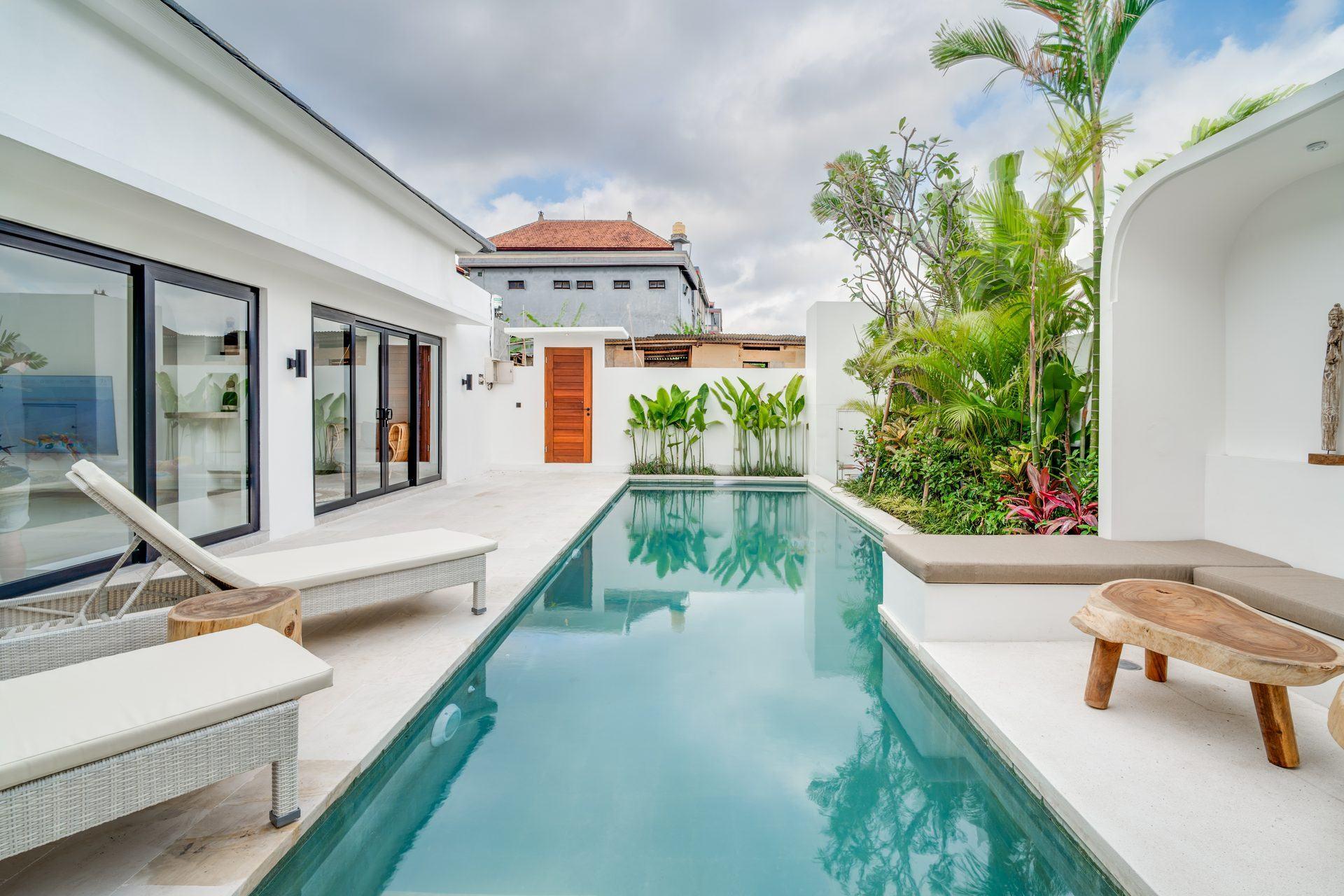
Which visa do you need to live in Bali?
For a first visit, the visa on arrival is enough: 30 days, extendable once on the spot. It is meant for scouting districts and meeting the teams, not for settling down. Every visa, fee and pitfall is detailed in our Bali visa guide.
To live in Bali long term, the simplest route, and the one most of our clients follow, goes through the villa itself:
- The PT PMA: an Indonesian foreign-owned company that holds your villa. Balimmo sets it up for you for 2.000 €, with its in-house lawyers, making sure the company's business codes match the actual use of the villa.
- The investor KITAS: the residence permit attached to that company. It lets you live legally in Indonesia for 2 years, renewable as long as the company is active, for you, your spouse and your children. Count roughly 1.200 € to 1.300 € per person and 850 € to 900 € per child.
On timing, setting up the company takes about a month, then two to two and a half months for the KITAS. Started alongside the construction, your company and your residence permit are ready well before handover.
Other residence permits exist (retirement, second home, remote work), each with its own income, age or bank deposit conditions. For anyone with a property project, the investor KITAS remains by far the simplest and clearest option.
Where to live in Bali depending on your profile?
Bali is not one destination but a mosaic of districts with very different atmospheres. The right choice depends on your pace of life far more than on price.
- Canggu, Berawa and Pererenan: the heart of expat life, lively, close to the sea, with the highest concentration of cafés, coworking spaces and gyms. It is also the most expensive and the busiest area.
- Ubud: in the centre of the island, between rice fields and forest, calmer and cooler. Rents are among the most affordable of the sought-after areas, especially on the outskirts. More in our guide to investing and living in Ubud.
- Uluwatu and the Bukit peninsula: cliffs, beaches and ocean views, for those who want space and scenery rather than buzz. This is where our Balimmo Hills Uluwatu estate is located.
- Sanur: on the east coast, calm and flat, popular with families and retirees.
The north of the island is more isolated and less equipped. It works for a few quiet months, but we advise against it for a rental property project.
Many of our clients spend a few weeks on the island, in two or three different districts, before choosing where to build. What you love on holiday is not always what you prefer day to day.
Thinking about a project in Bali?
Our experts review your situation for free, with no commitment.
Rent or build your home in Bali?
While you are still discovering the island, renting is a sound decision. The question changes once you know you are going to stay, or come back for several months every year.
The starting calculation is simple. A two-bedroom villa rented for 615 € to 1.850 € per month adds up to 7.400 € to 22.000 € in rent per year, without building anything for yourself. A turnkey one-bedroom villa starts at 169.000 €, and a 90 sqm two-bedroom villa at around 240.000 €, including leasehold land, company, taxes, construction and furnishing.
The real difference is what the villa does while you are away. Many of our clients live in it part of the year and rent it out the rest of the time, in a market that welcomed 17 million visitors in 2025, including 7 million foreigners. On well-positioned villas, net yield sits between 10 and 13% per year for the rented periods, with an occupancy rate of around 75%.
On timing, count 14 to 18 months from the first call to handover: two to four months of design and permits, then 12 months of construction for a two-bedroom, 13 for a three-bedroom and 14 for a four-bedroom. On our programmes, the leasehold runs for 31 years.
A villa is not judged on delivery day, but ten years later. That is why build quality matters more than a postcard view: in a tropical climate, humidity and the rainy season make the difference between a house that ages well and one that deteriorates fast.
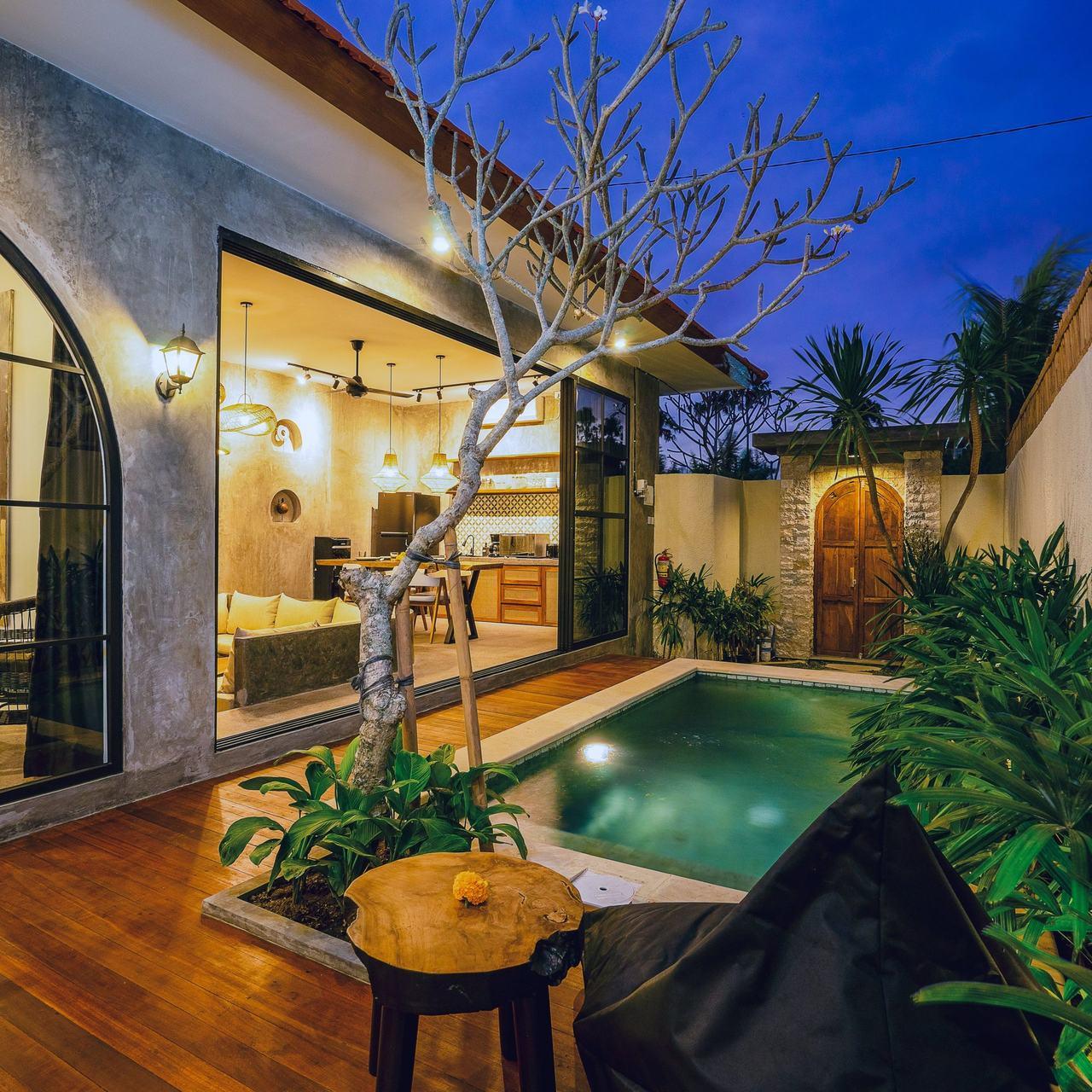
Living in Bali: the pros and cons
Bali delivers on many of its promises. A few constraints are worth knowing before you move, and they are easy to manage once anticipated.
The pros:
- A cost of living 40 to 60% lower than in Western Europe for an equivalent level of comfort
- Warm weather all year round, between beaches, rice fields and volcanoes
- A large international community, which makes settling in easy from the first weeks
- A residence permit that is simple to obtain when you own your villa, thanks to the investor KITAS
- A home that works for you: rented out while you are away, your villa funds part of your life on the island
- Everyday quality of life: household staff, restaurants, sport and wellness at accessible prices
- Improving infrastructure: better roads, a metro project and a new airport in the north of the island
The cons:
- Traffic in some districts, especially around Canggu at peak hours (the road and metro projects under way should improve it over the coming years)
- The rainy season, from November to March, with heavy showers late in the day
- The distance from home: a long flight from Europe or North America and a 6 to 7 hour time difference with Western Europe, to factor in for family ties and business calls
- Waste, visible in some areas (this is changing: waste sorting is now mandatory in several districts of Bali, a good sign for the years ahead)
Living in Bali in retirement or with a family
In retirement, Bali ticks almost every box: warm weather all year, a cost of living that lets you live comfortably on a Western pension, household staff, international clinics in Denpasar and Kuta for everyday care, and international health insurance that remains reasonably priced. Sanur, Ubud and Uluwatu, which are quieter, are often preferred to Canggu.
The residence permit is the easiest part when you own your villa: the PT PMA and the investor KITAS cover the couple, with no age condition. A retirement visa also exists from the age of 55, subject to income conditions, but it is not linked to your home.
Many of the retirees we work with split the year in two: four to six months in Bali in their villa, the rest back home near the family, with the villa rented out while they are away. Rental income covers a good part of the living budget on the island.
With a family, international schools are concentrated around Canggu, Ubud and Sanur. School fees are a significant budget to build into your calculation from the start. Many families choose their district based on the school, not the other way round. The investor KITAS covers dependent children.
In both cases, the housing question comes up quickly: a yearly lease, or a home of your own. Our complete guide to investing in Bali goes through the steps one by one, and shared investment lets you enter the market with a smaller ticket.
Frequently asked questions
Count from 920 € per month for a minimalist lifestyle, around 1.200 € to live comfortably alone with visa and health insurance, 2.000 € to 2.500 € for a European standard and around 3.000 € for a comfortable couple in a private two-bedroom villa. Housing and imported products make the difference.
When you build or buy a villa, the simplest route is the PT PMA, the company that holds the villa, and the investor KITAS attached to it: a residence permit of 2 years, renewable, for you, your spouse and your children. Balimmo sets up the company for 2.000 € with its in-house lawyers.
If you own your villa through a PT PMA, the investor KITAS covers the couple with no age condition, for 2 years, renewable. A retirement visa also exists from the age of 55, subject to income conditions, but it is not linked to your home. Thresholds change: have your file checked by a licensed agent.
Yes, through a leasehold (long-term right of use, 31 years on our programmes) or through a PT PMA, a foreign-owned company. A turnkey one-bedroom villa starts at 169.000 €, a two-bedroom at around 240.000 €. The structures are detailed on our page about the legal framework for investing in Bali.
Sanur, Ubud and Canggu concentrate the international schools. Sanur is the calmest, Ubud the greenest and the most affordable for rent, Canggu the liveliest but also the most expensive and the busiest. Many families choose their district based on the school.
Conclusion
Living in Bali in 2026 is within reach, provided you prepare three things: a suitable residence permit, a realistic budget for your district, and housing that matches your pace of life.
For those who stay, the villa quickly becomes the most logical solution: a place to live part of the year, a simple residence permit thanks to the investor KITAS, and rental income the rest of the time. Our guides to investing in Bali detail every step.